Introducing a novel murine model of ultra-processed diet induced heart failure
European Heart Journal


Abstract
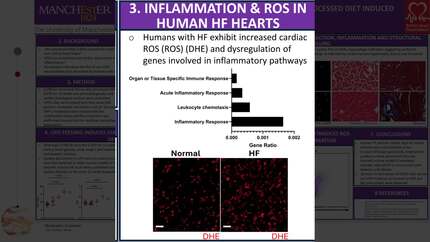
Heart failure (HF) remains a significant cause of mortality globally with ultra-processed diets (UPDs) being a prominent risk factor for disease development. The prevalence of UPDs has increased in the past 60 years with processed foods presently accounting for over 50% of the British and American diet. However, current in vivo models do not adequately address the role of UPD in HF progression. Both male and female mice were fed a UPD, newly designed to mimic human UPDs, for 12 weeks, and the induction of HF was diagnosed via echocardiogram. Further post-mortem molecular analysis was conducted to determine the degree of cardiac structural remodeling, inflammation and oxidative stress. To recapitulate our in vivo model, in vitro, human induced pluripotent stem cells-derived cardiomyocytes (hiPSC-CMs) were exposed to palmitic acid (PA) and the trans fatty acids (TFAs) linoelaidic and eladic acid. THP-1 monocyte cells were incubated with the conditioned hiPSC-CM media and M1 macrophage polarization was determined using flow cytometry. Human hearts obtained from HF patients exhibited significantly increased expression of ROS and RNAseq analysis revealed differential expression of several genes involved in inflammatory processes. Similar results were observed in the hearts of UPD-stressed mice with additional evidence of increased infiltration of M1 macrophages correlating with the development of diastolic dysfunction, impaired systolic function and structural cardiac remodeling. Intriguingly, when compared to other diet or chemical induced murine models of HF, those fed an UPD developed cardiac dysfunction within just 4 weeks and were the only cohort to display a degree of systolic dysfunction after 12 weeks of stress. Mimicking our findings using hiPSC-CMs, we found that those exposed to 18 hours of PA and TFA stress exhibited increased levels of ROS. Subsequent coculture of THP-1 cells with conditioned media obtained from hiPSC-CMs exposed to FA stress resulted in a significantly greater proportion of cells undergoing M1 macrophage polarization. Thus, we introduce a novel and clinically relevant non-invasive murine model of UPD induced HF providing a new experimental tool which, due to the inclusion of a diet more representative of that of humans triggering a more rapid development of HF in these animals, would be beneficial for the continuing advancement of HF research.

You may be interested in