Impact of virtual reality distraction on stress and pain reduction during implantation of cardiac pacemakers, defibrillators or cardiac resynchronisation therapy, a randomised controlled study
European Heart Journal


Abstract
Using virtual reality technology is an effective non-pharmacological method for reducing anxiety and pain during many surgical procedures and percutaneous interventions. To date, its benefits for patients undergoing implantation of cardiac pacemakers, defibrillators, or cardiac resynchronisation therapy have been scarcely examined. A randomised controlled study showed that using virtual reality headsets reduces anxiety and pain during axillary vein puncture but not throughout subcutaneous pocket creation in patients receiving cardiac pacemakers or defibrillators. There is a lack of information regarding the effect of virtual reality distraction on pain and stress during the entire procedure of cardiac pacemaker or defibrillator implantation and in patients receiving cardiac resynchronisation therapy.
This study aimed to evaluate whether virtual reality technology positively affects patients' pain and anxiety throughout the entire procedure of implantation of cardiac pacemakers, defibrillators, or cardiac resynchronisation therapy.
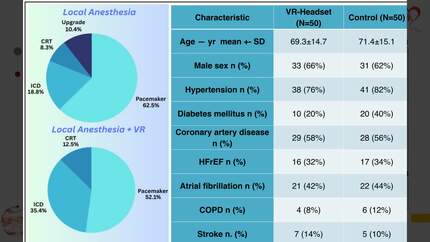
From January 2024 to February 2025, 62 Patients undergoing implantation of cardiac single-chamber or dual-chamber pacemakers or defibrillators and cardiac resynchronisation therapy were included in this study. Patients were randomly assigned to either a control group (n=31) or an intervention group (n=31). The control group received standard preoperative care and local anaesthesia using lidocaine. A virtual reality headset was used in the intervention group in addition to the standard preoperative care and local anaesthesia during the procedure. The procedure was performed in all patients using standard preparation and cephalic vein cutdown. The State-Trait Anxiety Inventory-State (STAI-S) questionnaire was filled out by patients pre- and postoperatively to determine their anxiety levels before and during the procedure. The analysis showed that the virtual reality group experienced significantly lower anxiety during the procedure in comparison to the group with standard care and local anaesthesia alone (Mean STAI-S +/- SD: 31,68 +/- 7,5, vs, 40,23 +/- 11,48, p=0.001). There was no statistically significant difference in periprocedural pain between the VR group and the control group using the numeric rating scale (Mean +/- SD: 2,71 +/- 2,47 vs 2.06 +/- 1,73, p: 0,23). The patients in the control group reported higher anxiety levels using the visual analogue scale compared to the intervention group (Mean +/- SD: 2,77 +/- 2,68 vs 1,35 +/- 1,96, p:0,02).
Distraction through virtual reality can be effectively used to reduce perioperative anxiety in patients undergoing implantation of cardiac pacemakers, defibrillators, and cardiac resynchronisation therapy. Algorithmic Flowchart of Study Design



You may be interested in