Adherence to imaging guidelines post WATCHMAN implantation in the real world: lessons from a multicenter prospective registry of high-volume operators in the US
European Heart Journal


Abstract
The FDA approved the WATCHMAN device in March 2015 with the caveat that follow-up transesophageal echo (TEE) be performed at 45 days and one year post implant, however clinical experience varies across centers and countries. We sought to evaluate the adherence to this FDA mandate in 1994 patients from six high volume centers in the US.
Patients were eligible for enrollment in this prospective registry if they were scheduled to undergo implantation with a WATCHMAN FLX or WATCHMAN FLX Pro device. Enrolled patients were implanted with a WATCHMAN device and followed per local standard of care without interference from the central core lab or study leadership. There were no pre-specified endpoints, but analyses include procedural success, procedural complications, and leak and thrombus rates as adjudicated by a central imaging core lab.
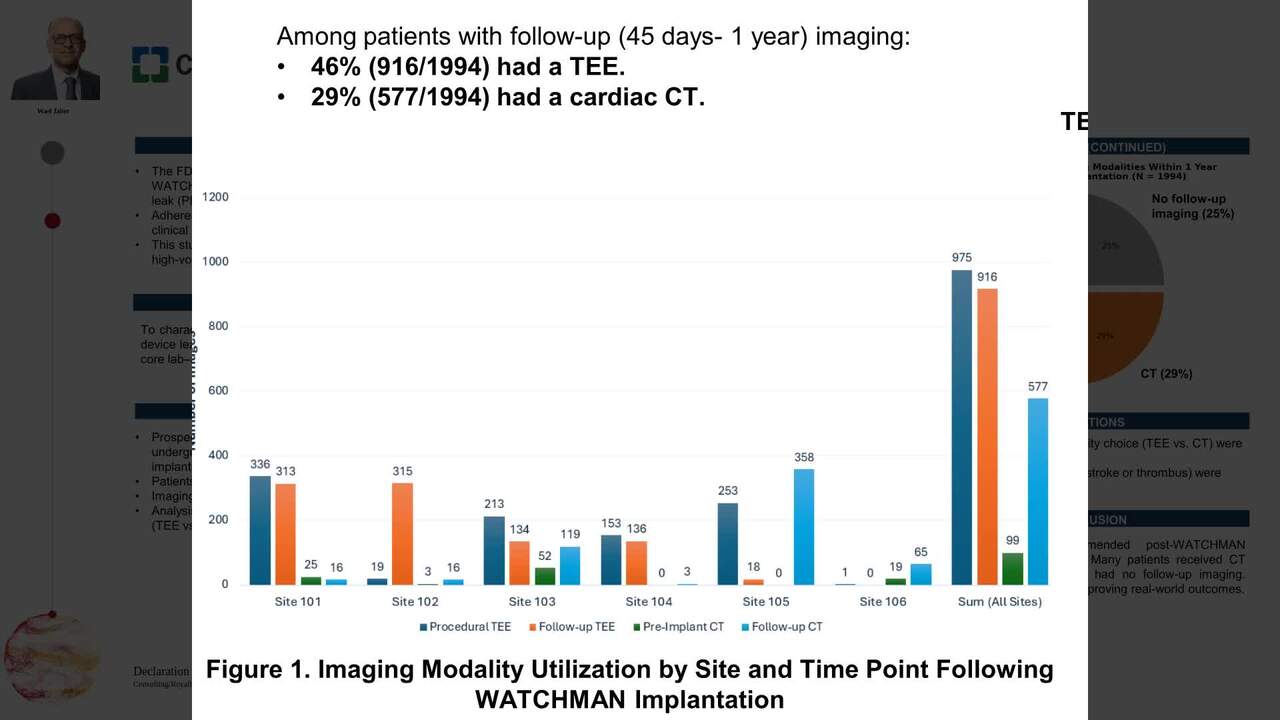
All patients had a TEE or intracardiac echo (ICE) guidance at time of the procedure. Of those with follow-up imaging, 46% (916/1994) of patients had follow-up TEE and 29% (577/1994) of patients had follow-up CT up to one year after device implantation.(Graph 1)
Despite clear FDA mandate to perform post-procedure imaging at 45 days and 1 year post WATCHMAN implant, adherence to these mandates remains imperfect with a significant number having cardiac CT rather than TEE. Further studies are needed to explore the geographic, clinical, healthcare resources as barriers to re-image patients to optimize performance of the LAA occlusion devices for stroke prevention.
Contributors


D Nair
Author
B Mikaelian
Author
M Shah
Author
A Sadhu
Author
M Kanj
Author

J Ramchand
Author
P Cremer
Author

You may be interested in