Not clinical characteristics, but analgosedation protocol is the main predictor of sedation-related adverse events in pulsed-field ablation
European Heart Journal


Abstract
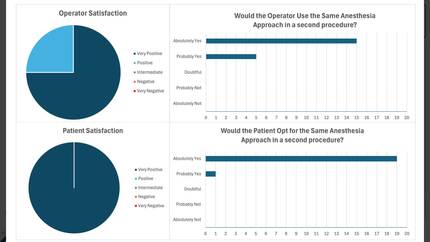
Deep analgosedation (DAS) is frequently used in pulsed-field ablation (PFA) of atrial fibrillation (AF). Its main advantage is that it does not require securing the patient´s airway. However, DAS is associated with a significant risk of sedation-related adverse events (SAE). Data on clinical predictors of SAE are scarce.
The presented analysis aimed to find predictors of SAE in patients who underwent PFA for AF under DAS based on two different regimens.
This study is a secondary analysis of a randomised trial. We analysed patients who underwent PFA for AF and were randomly assigned to arm P (propofol-opioid bolus administration) or arm R (continuous remimazolam-ketamine). The primary endpoint was defined as a composite of hypoxemia, hypotensive, or hypertensive events requiring intervention or leading to procedural interruption. Considering all major relevant clinical and procedural variables, the final logistic regression model was defined using a stepwise algorithm (bidirectional elimination, Akaike’s Information Criterion metrics).
85 patients (mean age 62.3 ± 11 years, 35.3% females) randomised to the P (N = 42) or R arm (N = 43) were analysed. The primary endpoint was observed in 48 (56.5%) patients. The final logistic regression model included arterial hypertension, study group, and diabetes; other independent variables were ruled out during the stepwise bidirectional elimination. Significant association with the primary endpoint was observed in two variables: arterial hypertension (odds ratio [OR] 5.3, 95% confidence interval [CI] 1.5 to 22.7; P = 0.01) and study arm (for remimazolam-ketamine based protocol OR 0.05, 95% CI 0.01 to 0.15; P < 0.001).
In the cohort of patients deeply sedated during PFA for AF either by propofol-opioid or remimazolam-ketamine regime, the main predictor of SAE was the sedation protocol itself (protective effect of remimazolam-ketamine). Among other variables, only arterial hypertension predicted primary endpoint occurrence.
Contributors


V Kunstatova
Author
V Sochorova
Author
P Osmancik
Author
F Duska
Author
D Herman
Author
P Waldauf
Author
J Vesela
Author
J Karch
Author
L Poviser
Author
J Hozmanova
Author
V Filipcova
Author
You may be interested in