Is pre-procedural Transesophageal echocardiography necessary in patients undergoing catheter ablation for atrial fibrillation under uninterrupted anticoagulation?
European Heart Journal


Abstract
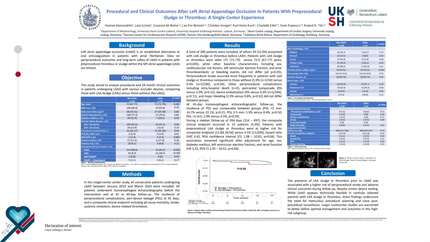
Transesophageal echocardiography (TEE) is advised in select cases prior to catheter ablation of atrial fibrillation (AF), particularly in those that were not on optimal anticoagulation therapy before the procedure, to rule out left atrial (LA) thrombus. We examined the rate of thromboembolic events in patients receiving AF ablation with vs without the thrombus screening using TEE.
Consecutive patients undergoing AF ablation at our institution under uninterrupted anticoagulation from 2015-2023 were included in this analysis. Based on the use of TEE for pre-procedural thrombus-screening, patients were divided into group 1: TEE was used (n=2,312) and group 2: TEE was not used (n=10,453). All patients were on the non-vitamin K antagonist oral anticoagulant (NOAC) for at least 4 weeks before ablation. Patients in group 1 were matched with group 2 subjects according to propensity scores with a 1:2 ratio, to control for confounding due to possible imbalance of covariates between groups. All patients were followed up for 1 year for thromboembolic events [stroke or transient ischemic attacks (TIA)].
Baseline characteristics of the study population are provided in table 1. At 1-year, 4 (0.2%) patients in group 1 and 33 (0.3%) in group 2 suffered from stroke while being on anticoagulation (p=0.349). Time to stroke/TIA was 243.75 ± 55.87 vs 187.60 ± 97.83 days in group 1 and 2 respectively (p=0.271). No periprocedural stroke/TIA were reported.
Propensity-matching was performed adjusting for AF type, CHA2DS2-VASc score, LVEF% and left atrial diameter as covariates. The population included 2,312 and 4,624 patients in group 1 and 2 respectively. Reported stroke events in the matched population were 4 (0.2%) in group 1 and 16 (0.3%) in group 2 (p=0.302).
In this large consecutive series, stroke rate was comparable with vs without pre-procedure screening with TEE in both real-world and propensity-matched population undergoing catheter ablation under uninterrupted anticoagulation. Thus, pre-ablation TEE screening for thrombus is redundant in well-anticoagulated patients. Baseline table
Contributors

P G Torlapati
Author
V M La Fazia
Author
C A R O L A Gianni
Author
B Macdonald
Author
A Mayedo
Author
A Al-Ahmad
Author
J D Burkhardt
Author
J Allison
Author
W Bode
Author
G J Gallinghouse
Author
R Horton
Author
L Di Biase
Author
A Natale
Author
You may be interested in