Lifestyle factor analysis and cardioversion outcomes in regional Australia: a tertiary centre experience.
European Heart Journal


Abstract
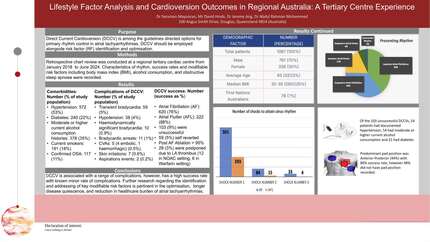
Direct Current Cardioversion (DCCV) is the primary rhythm control option for treating atrial tachyarrhythmias as it pertains to have a higher success rate. However, in regional areas, DCCV needs to be employed alongside risk factor (RF) optimisation. Therefore, understanding risk factors, developing screening tools, creating early intervention pathways, can ensure long-term successful outcomes.
Measure the modifiable lifestyle RFs and outcomes of DCCV performed for atrial fibrillation (AF) and atrial flutter (AFL) at a regional Australian hospital from January 2018 to June 2024
Retrospective chart review identified DCCV performed for AF and AFL and measured patient risk factors. Documentation gaps for RF were noted particularly for substance abuse.
1054 patients were identified to have had DCCV. The predominant presenting rhythm was AF (77.5%), majority were inpatients (56.4%) and 225 participants required at least another DCCV over the review period. Average age was 64 and 81.8% were male.
Sub-analysis of approximately 600 of the most recent cases found an 88.8% success rate, a further 5.4% self-reverted to sinus rhythm, 11.3% were unsuccessful and 2.7% had to postpone due to identification of LA thrombus. Predominant pad position was Anterior-Posterior (51%) with 87.5% success rate, however 37% did not have pad position recorded.
Serum magnesium was checked for all patients and there was no unsuccessful DCCV in patients with levels above 0.96 mmol/L. AFL had a higher successful DCCV rate at 97.7%. Even amongst patients with previous CTI and PVI ablations, the success rate of DCCV on subsequent presentation is greater than 95%.
Median BMI was 30-35, with lower success rates for BMI 45-50. 77 were indigenous Australians, 223 had a history of moderate or higher daily alcohol consumption, 91 patients had confirmed OSA but 295 have not had formal assessment for OSA yet.
80 patients developed complications, 59 experienced transient bradycardia and/or hypotension, 7 had minor skin irritations, and there were 7 bradycardic arrests with one CVA.
DCCV remains a primary method of rhythm control in atrial tachyarrhythmias. DCCV is associated with a range of complications, however, has an overall high success rate.
RF optimisation can contribute to long term preservation of sinus rhythm which is the ultimate goal. Addressing the large unaddressed key modifiable RF with appropriate assessment and structured service delivery will help reduce AF/AFL burden in our communities.
Contributors

You may be interested in