Re-implantation strategies in cardiac implantable electronic devices
European Heart Journal


Abstract
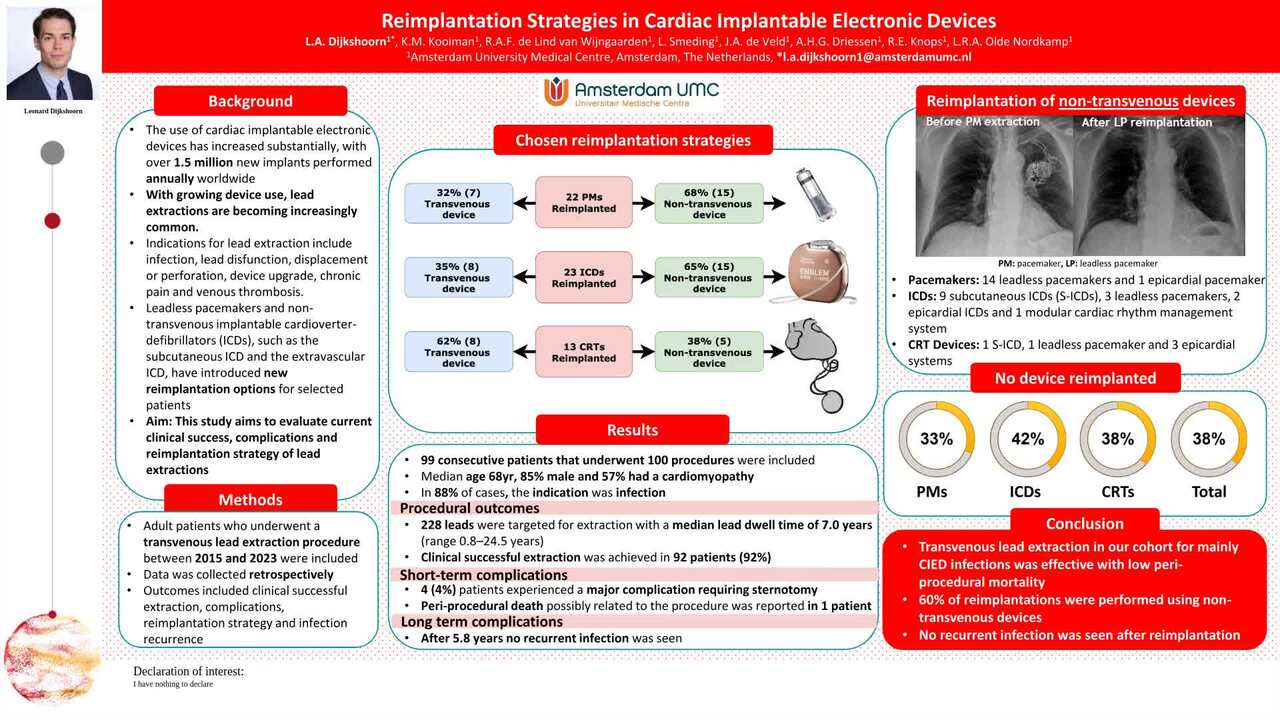
The increasing use of cardiac implantable electronic devices (CIED) has led to a rise in device-related infections and complications, which are associated with high morbidity and mortality. However, data on optimal re-implantation strategies remain limited.
This study aimed to evaluate clinical success, complications and re-implantation strategy of lead extractions.
A retrospective cohort study was conducted at a single center, including patients who underwent lead extraction procedures between 2015 and 2023. Outcomes included clinical successful extraction, complications, re-implantation strategy and infection recurrence.
Among 88 consecutive patients (median age 72yr, 84% male, 53% cardiomyopathy), a total of 40 implantable defibrillators (46%), 29 pacemaker (33%) and 19 cardiac resynchronization devices (33%) with a total of 203 leads were extracted. CIED infection was the main indication for extraction (84%). Median lead dwell time was 7 years (range 1.1–23 years). Clinical successful extraction was achieved in 78 (89%) of patients, and 4 (4.5%) experienced a major complication. Peri-procedural death was reported in 1 patient. CIED re-implantation was performed in 61%, of whom 60% transitioned to a non-transvenous device. Explanted devices were not reimplanted primarily due to a change in clinical indication. After a median follow-up of 3.8 years, 16 (18%) patients died, no infections reoccurred and none of those with non-transvenous device required transvenous implantation.
In a cohort where lead extraction was mainly performed for CIED infections, lead extraction is effective with high success rates and low peri-procedural mortality. Moreover, re-implantation with a non-transvenous systems is effective and safe.
Contributors





You may be interested in