Comparative in-hospital outcomes of acute ischemic stroke by preexisting atrial flutter or atrial fibrillation, stratified by CHADSVA score
European Heart Journal


Abstract
Atrial fibrillation (AF) and atrial flutter (AFL) are managed with similar approach to prevent embolic stroke, using the same CHA2DS2-VA threshold score for anticoagulation therapy in current guidelines. However, the distinct impact of AFL on stroke outcomes is unclear. We investigated the extent of preexisting AFL vs. AF among non-elective patients with acute ischemic stroke (AIS) and evaluated their effect on in-hospital outcomes and disposition.
Using the National Inpatient Sample (NIS) database, we identified patients hospitalized for AIS between 2016 and 2021 in the US with preexisting AFL, AF, or no atrial arrhythmia. Stroke severity was assessed by the Administrative Stroke Outcome Variable (ASOV) measure, a composite of in-hospital mortality and intermediate/long-term facility care discharge disposition for each discharge. The results were then categorized according to arrhythmia groups and stratified by CHA₂DS₂-VA scores.
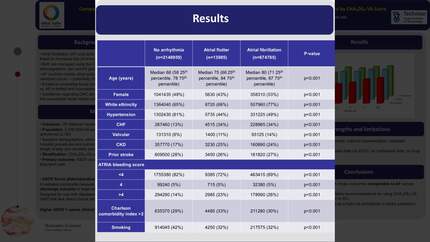
An estimated total of 2836829 patients were hospitalized with AIS during the study period, 13085 had preexisting AFL, 674785 AF and 2148959 had no atrial arrhythmia. Patients with AFL and AF were older and had more comorbidities compared with those with no atrial arrhythmia. ASOV rates were higher among AFL and AF patients compared to those with no atrial arrhythmia, across all CHA₂DS₂-VA strata. No significant differences in ASOV rates were observed between patients with preexisting AFL or AF across all CHA₂DS₂-VA strata.
AFL is associated with comparable AIS hospitalization outcomes to AF when stratified by CHA₂DS₂-VA score. These findings support current guidelines recommendations for utilization of the CHA₂DS₂-VA score in anticoagulation therapy decisions in AFL patients. Chart
Contributors



You may be interested in