Gender differences in nonagenarians undergoing pacemaker implantation
European Heart Journal


Abstract
Pacemaker implantation in very elderly patients is an increasingly common practice for treating bradyarrhythmias. However, the influence of gender on clinical characteristics, laboratory findings, and prognosis in this population remains underexplored. This study aims to compare and analyze gender differences in these patients.
This observational, retrospective study included consecutive patients aged ≥90 years who underwent their first permanent pacemaker implantation between January 1, 2020, and November 30, 2024. Patients were divided into two groups based on gender. Demographic and clinical data were collected from electronic medical records.
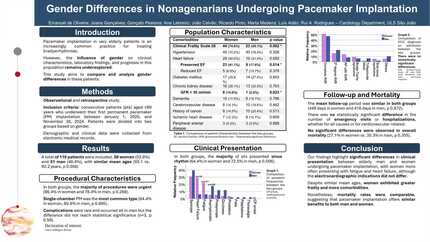
A total of 110 patients were included, 59 women (53.6%) and 51 men (46.4%), with similar mean ages (93.1 vs. 92.2 years, p 0.056). Syncope was the most common presenting symptom in both groups (30.5% in women vs. 39.2% in men), but heart failure symptoms and fatigue were more frequent in women (28.8% vs. 5.9% and 22% vs. 5.9%, p 0.004). Conversely, dizziness and absence of symptoms were more common in men (11.8% vs. 3.4% and 17.6% vs. 5.1%, p 0.004). No significant differences were found in indication, rhythm, or pacemaker type.
Women had significantly higher rates of Clinical Frailty Scale (CFS) scores ≥6 (74.6% vs. 45.1%, p 0.002) and advanced chronic kidney disease (14% vs. 2%, p 0.023). Conversely, the prevalence of left ventricular dysfunction was higher in men (13.7% vs. 8.9%, p 0.03), while women had a greater prevalence of heart failure with preserved ejection fraction (41.1% vs. 17.6%, p 0.03).
No significant differences were observed in overall mortality (27.1% in women vs. 35.3% in men, p 0.355) during an average follow-up of 433 days.
Our findings highlight significant differences in clinical presentation between nonagenarian men and women undergoing pacemaker implantation, even though the electrocardiographic indications for pacemaker implantation did not differ. Despite similar mean ages, women exhibited greater frailty and more comorbidities, such as heart failure with preserved ejection fraction and advanced chronic kidney disease. Nonetheless, mortality rates were comparable between genders, suggesting that pacemaker implantation offers similar benefits to both men and women.
Contributors

J Goncalves
Author
G Pestana
Author
A Lebreiro
Author
J Calvao
Author
R Pinto
Author
M Madeira
Author
L Adao
Author
R Rodrigues
Author
You may be interested in