Mortality and prognostic factors in pacemaker implantation in the extreme eldery
European Heart Journal


Abstract
Permanent pacemaker (PM) implantation is the treatment of choice for various bradyarrhythmias and is increasingly common in nonagenarian and centenarian patients due to rising life expectancy. This study aimed to assess mortality and prognostic factors in this patient population.
This observational, retrospective study included consecutive patients aged ≥90 years who underwent PM implantation between January 1, 2020, and November 30, 2024. Mortality rates were evaluated, and variables associated with higher mortality were investigated. Clinical and demographic data were retrieved from electronic medical records.
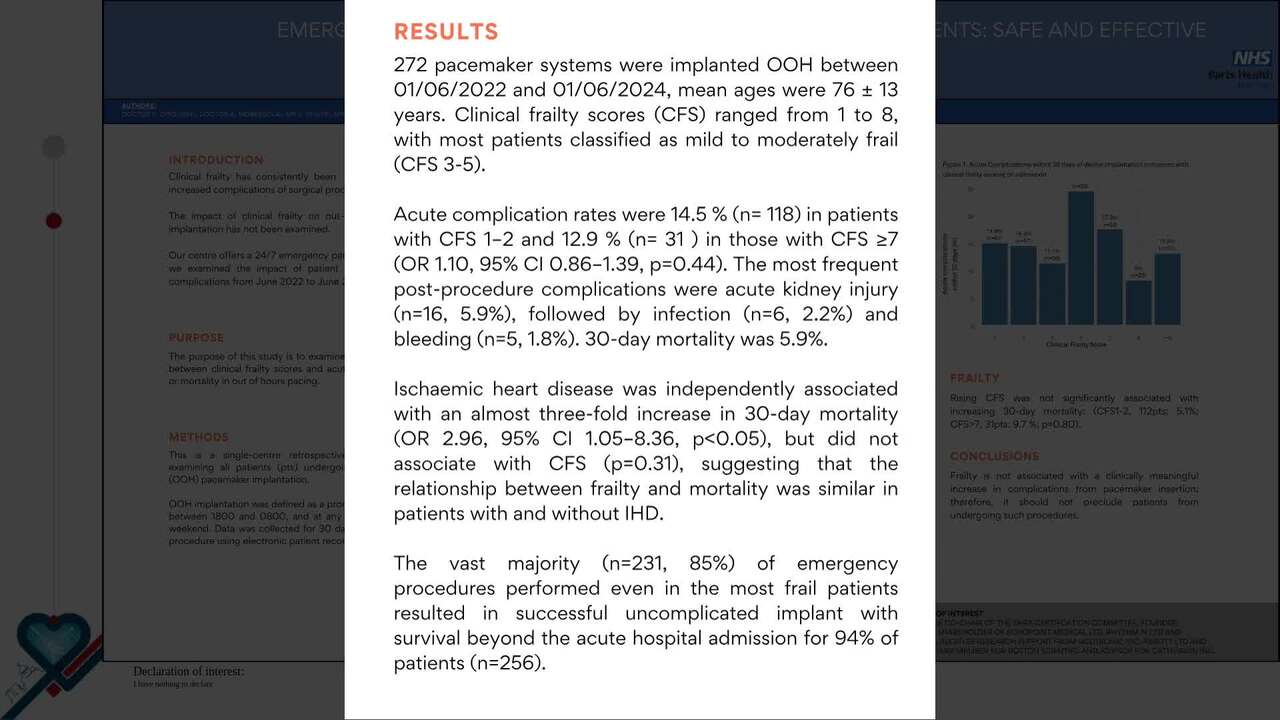
A total of 110 patients were included, 76 alive and 34 deceased. Mean age was similar between groups (92.5 years vs. 92.9 years, p 0.537). Overall mortality was 30.9%, with a mean follow-up of 433 days.
The Clinical Frailty Scale (CFS) was more frequently ≥6 in deceased patients (79.4% vs. 52.6%, p 0.008). Deceased patients also showed a higher prevalence of dementia (29.4% vs. 10.8%, p 0.016), cerebrovascular disease (29.4% vs. 11%, p 0.018), and severe left ventricular dysfunction (SLVD) (2.1% vs. 0%, p 0.03). No significant differences were observed in clinical presentation or electrocardiographic findings.
Single-chamber PMs were more common in the deceased group (82.4% vs. 53.9%, p 0.004). Deceased patients also had a higher mean number of emergency department visits per patient, both for all causes (4.44 vs. 1.28, p 0.004) and cardiovascular causes (0.76 vs. 0.24, p 0.004).
To calculate one-year mortality while accounting for potential follow-up losses or data import misses, we compared patients who died within 365 days of the procedure with those who attended at least one follow-up visit beyond this period. We identified 75 patients fitting these criteria, 61 were alive and 14 deceased within the first year, resulting in a one-year mortality rate of 18.7%. Deceased patients more frequently had a CFS score ≥6 (92.9% vs. 57.4%, p 0.013) and dementia (35.7% vs. 11.7%, p 0.028). Complication rates were similar between groups (0% vs. 3.4%, p 0.492), and no significant differences were identified in other analyzed variables.
In our study, overall mortality was 30.9% with an average follow-up of 433 days, primarily associated with elevated CFS scores, dementia, cerebrovascular disease, and SLVD. One-year mortality was 18.7%, predominantly linked to overall patient frailty. The indication for PM implantation did not influence outcomes and was not associated with significant complications.
Contributors

J Goncalves
Author
G Pestana
Author
A Lebreiro
Author
J Calvao
Author
R Pinto
Author
M Madeira
Author
L Adao
Author
R Rodrigues
Author
You may be interested in