Percutaneous left atrial appendage occlusion versus direct oral anticoagulation therapy in clinical practice: a propensity-score matched study
European Heart Journal


Abstract
Left atrial appendage occlusion (LAAO) has been proposed as an alternative to anticoagulants for stroke prevention in atrial fibrillation (AF). While some studies suggest a comparable efficacy to warfarin and non-inferiority to direct oral anticoagulants (DOACs), but comparative data are limited.
In this propensity score study in a large cohort of patients with AF we aimed to investigate the efficacy and safety of LAAO compared to direct oral anticoagulants (DOACs) in routine clinical practice.
Patients with AF who received either LAAO or a DOAC between 2013 and 2023 were included. The index date was the date of the LAAO procedure or the date of the DOAC prescription for DOAC-treated patientsPropensity score matching was used to adjust for potential confounding variables in the baseline characteristics and risk factors between the cohorts creating balanced comparison groups. Outcomes included ischemic stroke, major bleeding, and all-cause mortality.
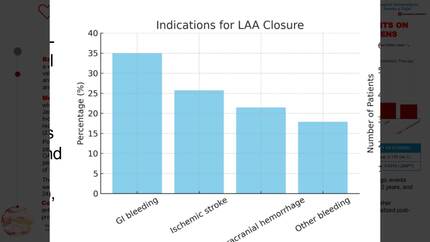
Of the 1040 patients with LAAO and 130608 with DOACs the final cohort included 904 propensity matched patients in each group with a mean follow up of 2850 patient-years. Patients were predominantly male (71%) with 50% being older than 75 years. Common risk factors included hypertension (87%), diabetes (25%), prior stroke (24%), history of major bleeding (25%), renal failure (10%, including 0.4% on dialysis), and cerebral amyloid angiopathy (0.8%).
LAAO was associated with a significantly higher risk of stroke (1.1% vs 0.5% patient-years; HR 2.25, 95% CI 1.20-4.22) compared to DOACs. There was no statistically significant difference between the two groups in terms of major bleeding events (2.0% vs 1.99% patient-years; HR 1.01, 95% CI 0.70-1.47; p=0.91). Similarly, all-cause mortality rates were comparable between the LAAO and DOAC groups (6.7% vs 7.6% patient-years; HR 0.87, 95% CI 0.72-1.06; p=0.19).
In routine clinical practice, LAAO was associated with a significantly higher risk of ischemic stroke compared to DOACs, without a reduction in major bleeding or all-cause mortality. These findings suggest that DOACs may be a preferable option for stroke prevention in most AF patients, and highlight the importance of careful patient selection for LAAO.



You may be interested in