Impact of colchicine on atrial fibrillation recurrence following pulmonary vein isolation
European Heart Journal


Abstract
Recurrence of atrial fibrillation (AF) following pulmonary vein isolation (PVI) is common. Inflammation is hypothesized to be a driver of recurrent AF and is of particular importance in the context of PVI given the elevated inflammatory state following the procedure. Colchicine is a widely available anti-inflammatory that has been shown to reduce perioperative AF following cardiac surgery. It is plausible colchicine following PVI may reduce recurrent AF given its anti-inflammatory properties.
The purpose of this analysis is to determine the effects of colchicine on clinical outcomes following AF ablation.
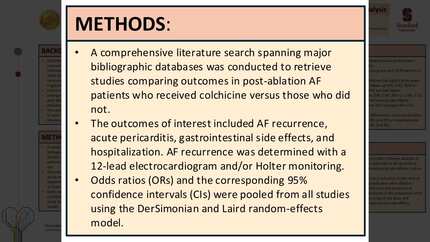
PubMed, EMBASE, and Cochrane databases were queried from inception to January 2025 to identify studies that examined the impact of colchicine use on outcomes of interest such as AF recurrence, pericarditis, hospitalizations, and other adverse events. Two independent reviewers extracted data, and disagreements were resolved by consensus or a third author. Effect estimates were pooled using a random-effects model and reported as odds ratios (OR) for dichotomous outcomes with 95% confidence intervals.
Among 311 studies identified on initial search, seven studies met inclusion criteria. Three studies were randomized controlled trials, and the remainder were propensity-score matched observational studies. These studies included 2,554 patients in total -- 1,209 patients in the colchicine group and 1,345 in the control group. Patients were 69.1% male, mean age of 66.9 ± 8.4 years and 62.0% had paroxysmal AF. The average ejection fraction was 55.7 ± 5.6%. Colchicine was associated with a statistically significant lower incidence of AF following ablation compared to placebo (OR: 0.67; [0.55, 0.81], p<0.001). Colchicine use was also associated with a statistically significant increase in gastrointestinal side effects (OR: 3.40; [1.38, 8.38], p<0.001). There are trends toward decreased rates of pericarditis (OR: 0.47; [0.20, 1.09], p=0.08) and decreased hospitalizations (OR: 0.83; [0.54, 1.26], p=0.38) with colchicine use, though these did not reach statistical significance.
The use of colchicine is associated with a reduced incidence of AF recurrence following ablation, though at the cost of increased gastrointestinal side effects.
Contributors

You may be interested in