Prognostic value of atrial fibrillation duration and left atrial low-voltage area after atrial fibrillation ablation: insights from the SUPPRESS AF study
European Heart Journal


Abstract
Although atrial fibrillation (AF) duration and left atrial low-voltage area (LVA) are shown to be associated with AF recurrence after AF ablation, their combined impacts on AF recurrence after AF ablation remains unclear in persistent AF patients with LVA.
We analyzed data from the Efficacy and Safety of Left Atrial Low-voltage Area Guided Ablation for Recurrence Prevention Compared to Pulmonary Vein Isolation Alone in Patients with Persistent Atrial Fibrillation trial (SUPPRESS AF trial), comparing pulmonary vein isolation (PVI) alone with additional LVA ablation in patients with persistent AF who had LVAs (defined as areas with a bipolar peak-to-peak voltage of <0.5mV) covering ≥5 cm2 of left atrial surface on a voltage map after PVI. This post hoc study investigated the association between AF duration and LVA extent, and AF recurrence.
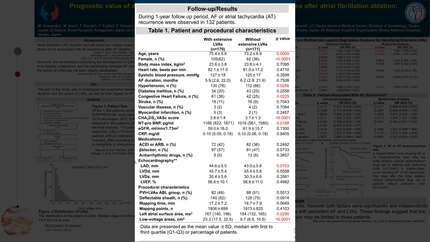
The trial included 342 eligible patients (age: 74±6 years, male: 51%, median AF duration: 6.0 (2.8-21.9) months, mean LVA area: 13.4 (8.7-23.5) cm2). During 1-year follow up period, AF or atrial tachycardia (AT) recurrence were observed in 132 patients. AF duration and LVA area were significantly and independently associated with AF recurrence, even after adjusting for potential confounding factors. Patients with longer AF duration (≥19.2 months by ROC curve analysis; AUC 0.568) had higher risk of AT/AF recurrence, in relating to extensive LVA (≥13.4cm2: median value) (with extensive LVA; 52% vs 38%, p=0.029, without extensive LVA; 59% vs 27%, p<0.0001, respectively).
AF duration was associated with AT/AF recurrence after AF ablation in persistent AF patients with LVA, regardless of the extent of LVA.

You may be interested in