Optimal blanking period post atrial fibrillation ablation a systematic review and meta-analysis
European Heart Journal


Abstract
A blanking period (BP) of three months has been typically employed following pulmonary vein isolation (PVI), the cornerstone of atrial fibrillation (AF) ablation. However, the length of BP has come under scrutiny by many series using post ablation continuous long-term monitoring, each proposing a different shorter duration. Current AF ablation guidelines propose a BP of 56 days. The optimal extent of BP is yet to be clearly defined. A meta-analysis of published studies using continuous post-ablation monitoring that reported cut-offs for BP were performed.
We aim to identify the optimal duration of BP using continuous monitoring after catheter ablation for AF.
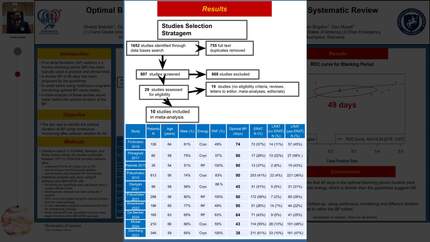
A search was conducted on PubMed, Springer, and Wiley Online Library for studies published from 2011 to 2024, and studies that enrolled patients undergoing PVI for AF (using cryo or RF), had continuous monitoring post ablation and reported early and long-term AF recurrences were included. Statistical analysis was done using R software and IBM SPSS v29. The ROC curve was plotted using the retisma function from the mada package, and the confidence interval was calculated using the aucboot function from the dmetartools package. The mean optimal BP was calculated using the case weight function of the IBM SPSS package.
Ten studies with a total number of 2136 patients (age 59 ± 60, male 67.2%, parox AF 74.3%)(average of all the studies). A diagnostic Meta-Analysis using the random effects model was performed. Meta-analytic Study ROC analysis of optimal BP data from five studies identifies 49 days as an optimal duration of BP, with an AUC of 0.83 (95% CI: 0.75–0.87), specificity of 78.4%, and sensitivity of 79.6%.
This meta-analysis suggests 49 days as the optimal blanking period duration post ablation for AF using thermal energy. This cut-off is shorter than BP duration proposed by the guidelines. These results emphasize the importance of continuous cardiac monitoring for ERAF. Larger studies with continuous monitoring and different ablation energy sources are needed to refine BP extent.
Contributors




You may be interested in