Atrial fibrillation reversal and progression rates: a systematic review and meta-analysis
European Heart Journal


Abstract
Atrial fibrillation (AF) is a dynamic condition that may change over the course of time. Although less common, some patients with AF may transition from the sustained form to a paroxysmal pattern.
The study aimed to assess the incidence and predictors of AF progression, regression and remission.
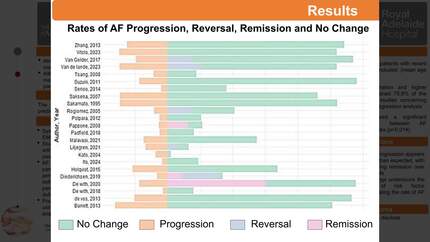
We conducted a systematic search of PubMed, Scopus, and EMBASE from inception through August 2017. Studies were included if they reported on patients with new-onset AF or those diagnosed within the past year. AF progression was defined as the transition from paroxysmal to persistent/permanent AF or from persistent to permanent AF, AF reversal was defined as the transition from persistent AF to paroxysmal AF or lower burden. Remission was defined by no recurrence during follow-up. Pooled cumulative incidence rates were calculated using random-effects models, while meta-regression analyses were performed to identify predictors contributing to variability between studies.
We included 24 studies with 22391 patients with recent onset AF. The incidence of AF progression was 10.9 per 100 patient-years (95% CI: 9.8–11.9; I² = 99.9%; P < 0.001). For AF reversal, the incidence was 11.9 per 100 patient-years (95% CI: 8.0–15.9), while AF remission had an incidence of 26.5 per 100 patient-years (95% CI: 17.4–35.6) across five studies. Longer follow-up duration and higher study population explained 75.8% of the heterogeneity among studies concerning AF remission in meta-regression analysis
The incidence of AF progression appears to be relatively low, with many patients achieving remission over longer follow-up periods. As studies highlight the potential role of cryoablation as an initial treatment for symptomatic, paroxysmal atrial fibrillation, the criteria for its use need to be reevaluated.
Contributors




You may be interested in