A meta analysis of effects of high-intensity statin and pcsk-9 inhibitor therapies on coronary plaque burden
European Heart Journal


Abstract
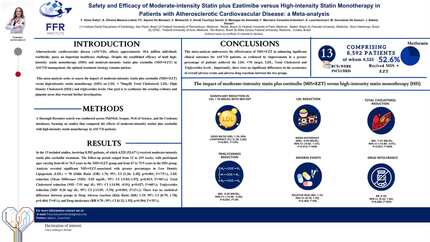
Atheromatous plaques constitute the hallmark of atherosclerotic cardiovascular disease (ASCVD). Low- density lipoprotein cholesterol (LDL-C) plays an essential role in the progression of atheroma. High-intensity statin therapy (HIST) is widely implemented as a first line lipid-lowering therapy. With the expanding use of Proprotein Convertase Subtilisin/Kexin type 9 (PCSK-9) inhibitors, further analysis is needed to evaluate whether the linear association of LDL-C and changes in percent atheroma volume (PAV) also persists for low LDL-C values achieved with HIST plus PCSK-9 therapy.
We aimed to evaluate the effects of different lipid-lowering therapy strategies on reductions in LDL-C levels and their respective influence on changes in PAV.
We performed a systematic search using the Pubmed, Cochrane, SCOPUS, and Web of Science databases for studies, evaluating the influence of an intensified lipid lowering therapy via statin monotherapy or combined with PCSK-9 inhibitors on the PAV changes assessed by serial intravascular ultrasound (IVUS). Manuscript and congress presentations, published until 1st of April 2024, were included. Search terms used were "atherosclerosis", "lipid-lowering therapy", "coronary heart disease", "statin therapy", "PCSK-9 inhibitor", "IVUS" and "percentage atheroma volume". Random-effects models provided conservative estimates. Treatment effect sizes were expressed as standardized mean differences (SMD) in mg/dl for LDL-C and in percentage points (pp) for PAV together with 95% confidence intervals (CI).
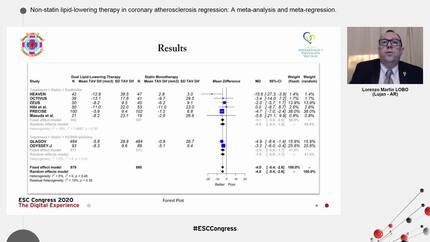
A total of 6,353 patients from 9 randomized controlled trials were included. In HIST monotherapy, the LDL-C was reduced by 59.3 mg/dl (95% CI: -66.4 to -52.2 mg/dl, P<0.01) while in studies with added PCSK-9 inhibitors LDL-C was reduced by 97.72 mg/dl (95% CI: -131.6 to -63.82 mg/dl, P<0.01). HIST alone yielded a PAV reduction of 0.96 pp (95% CI: -0.46 to -1.46 pp, P<0.01) while PCSK-9 inhibitors added to HIST yielded a PAV reduction of 1.92 pp (95% CI: -3.47 to -0.37 pp, P<0.01). Subgroup analyses of cohorts with a follow-up LDL-C ≥70 mg/dl (mean: 78 mg/dl [± 13.3 mg/dl]) showed a non-significant PAV change of -0.18 pp (95% CI: -1.35 to 1.0 pp, P=0.78) while cohorts with a follow-up LDL-C < 70 mg/dl (mean: 47 mg/dl [± 17.6 mg/dl]) showed a signficiant PAV reduction of 1.31 pp (95% CI: -1.81 to -0.81 pp, P<0.01). Mean changes in LDL-C for individual therapy strategies and the corresponding mean changes in PAV were linearly correlated, independent of treatment strategy (Figure 1).
Our findings demonstrate that adequate LDL-C reduction leads to significant decreases in coronary atheroma volume. Notably, the magnitude of the regression of PAV appears to be driven more by the magnitude of LDL-C reduction rather than by a specific treatment strategy. Regression of mean LDL-C and PAV changes
Contributors

E Tokmak
Author
A Mahabadi
Author
University of Duisburg-Essen - West-German Heart and Vascular Centre Essen , Germany

T Rassaf
Author
University of Duisburg-Essen - West-German Heart and Vascular Centre Essen , Germany
I Dykun
Author
You may be interested in