The effects of SGLT2 inhibitors in patients with preserved ejection fraction heart failure and type 2 diabetes: A randomized case-control study
European Heart Journal


Abstract
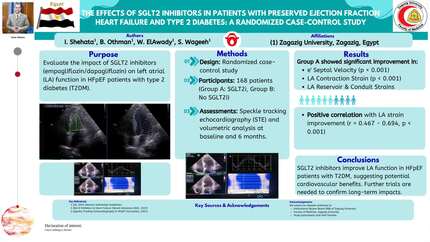
Heart failure with preserved ejection fraction (HFpEF) is the most common form of heart failure and is closely linked to type 2 diabetes mellitus (T2DM). While sodium-glucose cotransporter-2 inhibitors (SGLT2i) have been recognized for their cardiovascular benefits, their specific impact on left atrial (LA) function in HFpEF patients remains insufficiently explored. Since LA function plays a crucial role in the pathophysiology and prognosis of HFpEF, this study aimed to assess the mid-term effects of SGLT2i on LA function over a six-month period.
This study aimed to evaluate the impact of SGLT2 inhibitors on left atrial function in patients with HFpEF and T2DM using volumetric measurements and speckle tracking echocardiography (STE).
A randomized case-control study was conducted on 168 patients diagnosed with both HFpEF and T2DM. The participants were divided into two groups. Group A, consisting of 82 patients, received standard glucose-lowering therapy along with SGLT2 inhibitors, specifically empagliflozin or dapagliflozin. Group B, consisting of 86 patients, received standard glucose-lowering therapy without SGLT2i. Comprehensive echocardiographic evaluations, including STE and volumetric measurements, were performed at baseline and after six months to assess LA function. The key parameters analyzed included LA reservoir strain, LA conduit strain, LA contraction strain, and the mitral E/A ratio.
Patients in Group A exhibited significantly better echocardiographic outcomes compared to those in Group B. The mean rank values for e' septal velocity were 112.75 in Group A and 57.56 in Group B, with a p-value of less than 0.001. For e' lateral velocity, the values were 116.2 in Group A and 54.27 in Group B, also with a p-value of less than 0.001. LA contraction strain was 120.91 in Group A and 49.78 in Group B, again with a p-value of less than 0.001. Additionally, significant improvements were observed in LA reservoir strain and LA contraction strain in Group A. Post-treatment changes in LA reservoir strain had a correlation coefficient of 0.467 and a p-value of less than 0.001, while LA contraction strain had a correlation coefficient of 0.694 with the same p-value threshold. The administration of SGLT2i significantly increased the likelihood of improving LA function, with an odds ratio of 28.97 and a 95% confidence interval of 5.526 to 151.969, with a p-value of less than 0.001.
These findings indicate that SGLT2 inhibitors have a beneficial role in enhancing left atrial function and mechanics in HFpEF patients with T2DM. This suggests that SGLT2i therapy may contribute to reversing cardiac remodeling, potentially leading to improved long-term cardiovascular outcomes. However, further large-scale clinical trials are needed to validate these results. On admission: LA strain by TDI and STE After 6 Months: LA strain by TDI and STE


You may be interested in