Myocardial hypertrabeculation: on the threshold of normality
European Heart Journal


Abstract
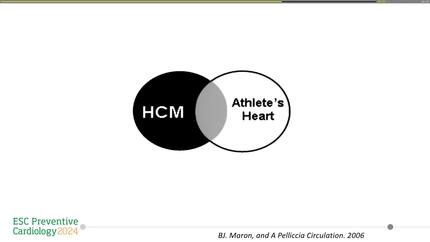
myocardial hypertrabeculation characterizes non-compaction, but can be found in healthy individuals, athletes, pregnant women and those with cardiomyopathies. Its echocardiographic identification is a diagnostic challenge.
to evaluate longitudinal and rotational myocardial mechanics, as well as systolic and diastolic function in athletes with and without myocardial hypertrabeculation.
forty athletes (30 with aerobic training and 10 with anaerobic training) were studied, 20 of whom met the criteria for hypertrabeculation according to the Chin criteria and 20 with compacted myocardium. The dimensions and function of the LV and RV, the volume and function of the LA, the longitudinal strain of the LV, the basal and apical rotation and twisting, the diastolic strain rate and the left atrial stiffness index were determined.
the indexed end-diastolic and ejection volumes of the LV were lower, and the mass and mass index were higher in athletes with hypertrabeculation, who also had lower LV ejection fraction, lower E/e’ ratio, lower LV and RV longitudinal strain, and lower basal, apical rotation, and twisting (Table 1).
LV hypertrabeculation, more frequent in athletes with aerobic training, may be a compensation mechanism that redistributes the increase in apical parietal stress, which, by modifying the helical arrangement of the myofibrils, reduces longitudinal strain and, mainly, apical rotation and twisting. Since myocardial performance remains intact, we believe that there are other compensation mechanisms to maintain efficiency, such as reduced systemic resistance by modulation of adrenergic receptors or adaptation of the autonomic system with increased inotropism.
Contributors

D B F Brindeiro_Filho
Author

J G S N Silveira_Neto
Author
C G S Sousa
Author
R R T C Castro
Author
J L A B Barros
Author
M P C A Alencar
Author
A D M S Sena
Author
K B O Oliveira
Author
C M B B M Melo
Author
You may be interested in