Self-limiting recovery from subacute haemorrhagic pericardial tamponade following early ST-segment elevation myocardial infarction: a case report
European Heart Journal - Case Reports


Abstract
Haemorrhagic pericarditis following an early ST-segment elevation myocardial infarction (STEMI) is commonly associated with intensive antithrombotic therapy, which may necessitate pericardiocentesis or surgery due to haemodynamic compromise. However, the natural progression of haemorrhagic pericarditis remains poorly documented.
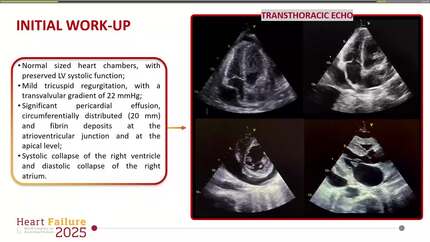
A 54-year-old man underwent primary percutaneous coronary intervention (PCI) of the left anterior descending artery for acute extensive anterior myocardial infarction. During the perioperative period, a combination of multiple antithrombotic agents was administered. The following day, the patient experienced pleuritic chest pain, and transthoracic echocardiography (TTE) revealed a small-to-moderate pericardial effusion (PE), consistent with post-infarction pericarditis. Five days later, he developed dyspnoea and jugular venous distension, with TTE indicating progression to a large PE. Cardiac magnetic resonance (CMR) imaging demonstrated diffuse pericardial enhancement and similar T1 values between the effusion and the right atrium, suggestive of haemorrhagic pericarditis while excluding cardiac rupture. Considering the mild haemodynamic compromise, emergency pericardiocentesis was deferred. Discontinuation of the anticoagulant agent and ticagrelor resulted in gradual PE resolution, with complete absorption achieved after 1.5 months.
This case highlights the potential development of haemorrhagic pericardial tamponade from small-to-moderate PE following early STEMI, particularly under intensive antithrombotic therapy in patients with transmural myocardial infarction. It also illustrates a rare, self-limiting course of haemorrhagic pericarditis, with CMR imaging supporting conservative management as a viable option in carefully selected patients.
Contributors

Yiting Cai
Author
Jing Yang
Author
Guangyao Zhai
Author
Beijing AnZhen Hospital affiliated to Capital Medical University Beijing , China
Amir Khalifa
Author
Andrea Freixa-Benavente
Author
Alexandru Patrascu
Author
Deepti Ranganathan
Author
You may be interested in