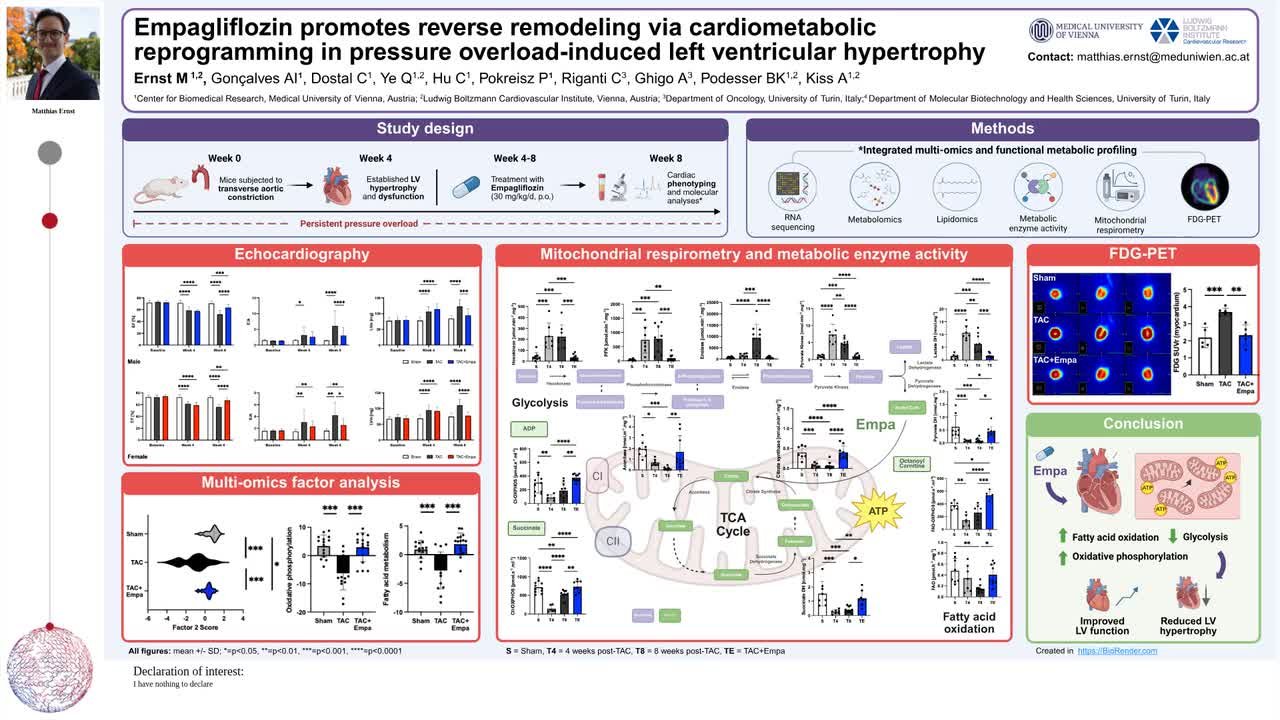
Empagliflozin enhances metabolic efficiency and improves left ventricular hypertrophy in a hypertrophic cardiomyopathy mouse model
European Heart Journal


Abstract
Hypertrophic cardiomyopathy (HCM) is a genetic cardiac disorder characterized by left ventricular hypertrophy (LVH), diastolic dysfunction, and impaired metabolic efficiency. This study investigates the therapeutic potential of the sodium–glucose cotransporter 2 inhibitor (SGLT2i) empagliflozin (EMPA) in ameliorating these pathological features in a mouse model carrying the myosin R403Q mutation.
Male mice harbouring the R403Q mutation were treated with EMPA for 16 weeks. Multi-nuclear magnetic resonance spectroscopy (31P, 13C, and 23Na MRS), echocardiography, transcriptomic, proteomic, and phosphoproteomic profiling were utilized to assess metabolic, structural, and functional changes.
Empagliflozin facilitated the coupling of glycolysis with glucose oxidation and normalized elevated intracellular sodium levels. Treatment resulted in a significant reduction in LVH and myocardial fibrosis as evidenced by echocardiography and histopathology. These structural improvements correlated with enhancements in mitochondrial adenosine triphosphate (ATP) synthesis, fatty acid oxidation, and branched-chain amino acid catabolism. Furthermore, EMPA improved left ventricular diastolic function and contractile reserve, underscored by improved ATP production and reduced energy cost of contraction. Notably, these benefits were linked to down-regulation of the mammalian target of rapamycin signalling pathway and normalization of myocardial substrate metabolic fluxes.
Empagliflozin significantly mitigates structural and metabolic dysfunctions in a mouse model of HCM, underscoring its potential as a therapeutic agent for managing this condition. These findings suggest broader applicability of SGLT2i in cardiovascular diseases, including those due to myocardial-specific mutations, warranting further clinical investigation.
Contributors


Jarrod Moore
Author
Fuzhong Qin
Author
Salva R Yurista
Author
Aifeng Zhang
Author
Huamei He
Author
Jordan M Chambers
Author
Dominique Croteau
Author
Raghuveera K Goel
Author
Hunter Smith
Author
Miranda C Wang
Author
Christopher S Chen
Author
Ion A Hobai
Author
Martina Rombaldova
Author
Ondrej Kuda
Author
Jil C Tardiff
Author
James A Balschi
Author
David R Pimentel
Author

Christine E Seidman
Author
Brigham and Women's Hospital, Harvard Medical School Boston , United States of America
Jonathan G Seidman
Author
Andrew Emili
Author
Wilson S Colucci
Author

You may be interested in