An activator of phosphatidylinositol 3-kinase alpha restores cardioprotection from ischaemia/reperfusion injury in mice with coronary atherosclerosis or insulin resistance

Cardiovascular Research

13 June 2025
Organised by: Logo
ESC Journals CORONARY ARTERY DISEASE, ACUTE CORONARY SYNDROMES, ACUTE CARDIAC CARE Acute Coronary Syndromes BASIC SCIENCE

Abstract

AbstractAims

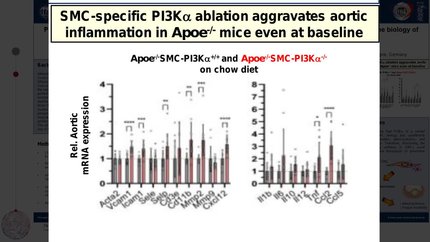
In patients with coronary artery disease (CAD), morbidity and mortality from myocardial infarction remain high. Cardioprotective strategies such as remote ischaemic conditioning (RIC) are highly effective in animal models but have disappointed in large clinical trials. One explanation may be that ischaemia and reperfusion (I/R) experiments are typically conducted in mice that lack CAD. Unlike most mouse models, double-mutant SR-BIΔCT/ΔCT;Ldlr KO mice do develop CAD when fed a high-fat diet (HFD). The aim of this study was therefore to use these mice to investigate cardioprotection in the setting of CAD. We hypothesized that RIC, which requires cell-surface receptor signalling, would be ineffective in these mice; but that UCL-TRO-1938, a phosphatidylinositol 3-kinase alpha (PI3Kα) activator that bypasses cell-surface receptors, would be cardioprotective.

Methods and results

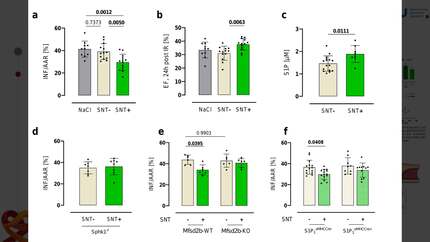
After 6-week HFD, double-mutant mice, but not wild-type (WT) or Ldlr KO mice, developed CAD as determined by histology. Anaesthetized mice were subject to 30-min coronary ischaemia and 2-h reperfusion. In line with our hypothesis, RIC reduced infarct size in WT and Ldlr KO mice, but did not reduce infarct size in double-mutant mice subject to I/R. We sought to understand the effects of CAD in double-mutant mouse hearts that might impair RIC, using RNA-sequencing (RNA-seq), immunostaining, and Western blot analysis. RNA-seq revealed significantly altered gene expression in double-mutant hearts compared with WT and Ldlr KO hearts, primarily in inflammatory pathways; in particular the interleukin-17 pathway. Coronary endothelial cells were activated, as shown by ICAM-1 expression in double-mutant but not Ldlr KO or WT. In contrast to RIC, treatment with UCL-TRO-1938 was cardioprotective in double-mutant mice.

Conclusion

The double-mutant SR-BIΔCT/ΔCT;Ldlr KO mouse strain may be a more clinically translatable mouse model of I/R and cardioprotection. Furthermore, UCL-TRO-1938 is a promising cardioprotective drug as it remains effective in a mouse model with CAD.

Contributors

David He
David He

Author

Sean M Davidson
Sean M Davidson

Author

University College London London , United Kingdom of Great Britain & Northern Ireland

ESC 365 is supported by