Transcatheter closure of aorto-right atrial fistula
European Heart Journal - Case Reports


Abstract
Aorto-right atrial fistulas are rare complications of cardiac surgery that can result in heart failure due to continuous left-to-right shunting. In patients with recent sternotomy, reoperation carries significant risk, making transcatheter closure a compelling alternative.
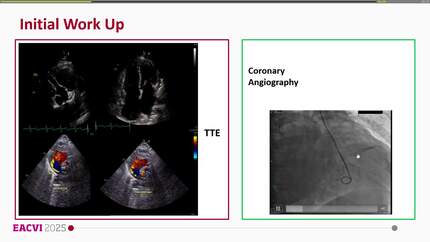
A 64-year-old man with a history of diabetes, cerebrovascular disease, and recent coronary artery bypass grafting complicated by ascending aortic dissection and repair presented with progressive dyspnoea. Prior to transfer, echocardiography suggested a cardiovascular fistula. On admission, multimodality imaging—including transthoracic and transoesophageal echocardiography and computed tomography—confirmed an aorto-right atrial fistula with elevated pulmonary artery pressures. Given the recent surgery and comorbidities, the heart team deemed the patient high risk for repeat operation and opted for percutaneous closure. Under general anaesthesia with transoesophageal echocardiographic guidance, the fistula was percutaneously occluded with a 10 mm × 7 mm Amplatzer Vascular Plug II. Post-procedural imaging confirmed successful closure without impingement on aortic valve structures. The patient was discharged in stable condition to a rehabilitation facility on dual antiplatelet therapy.
This case highlights the role of transcatheter closure in managing post-surgical aorto-right atrial fistulas. Comprehensive imaging and echocardiographic guidance were essential for procedural success. In select patients with high operative risk, percutaneous approaches provide a safe and effective alternative to repeat surgery.
Contributors

Jair Basantes de la Calle
Author
Hasan Jilaihawi
Author
Moody Makar
Author
Raj Makkar
Author
Gavin Lewis
Author
Jamol Uzokov
Author
Livia Gheorghe
Author
Alejandro Ismael Cordero
Author
Deepti Ranganathan
Author
You may be interested in