Catheterization laboratories open the doors for Extended Realities—review of clinical applications in cardiology
European Heart Journal - Digital Health


Abstract
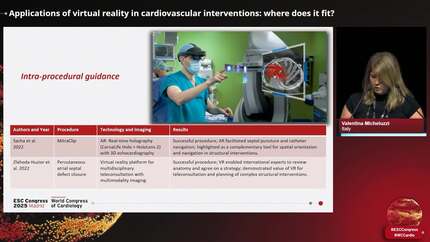
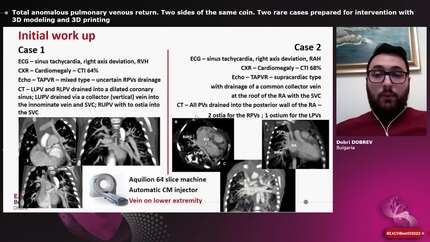
The complexity and spatial relationships between vascular and cardiac structures, as well as anatomical diversity, pose a challenge for planning and performing cardiac interventions. Medical imaging, especially precise three-dimensional imaging techniques, plays a key role in the decision-making process. While traditional imaging methods like angiography, echocardiography, computed tomography, and magnetic resonance imaging remain gold standards, they have limitations in representing spatial relationships effectively. To overcome these limitations, advanced techniques such as three-dimensional printing, three-dimensional modelling, and Extended Realities are needed. Focusing on Extended Realities, their main advantages are direct spatial visualization based on medical data, interaction with objects, and immersion in cardiac anatomy. These benefits impact procedural planning and intra-procedural navigation. The following publication presents current applications, benefits, drawbacks, and limitations of Virtual, Augmented, and Mixed Reality technologies in cardiac interventions. The aim of this review is to improve understanding and utilization of the entire spectrum of these innovative tools in clinical practice.
Contributors

Maria Kundzierewicz
Author
Katarzyna Kołodziej
Author
Arif Khokhar
Author
Tsai Tsung-Ying
Author
Artur Leśniak
Author
Pawel Zakrzewski
Author
Hubert Borecki
Author
Ewelina Bohn
Author
Jan Hecko
Author
Jaroslav Januska
Author
Daniel Precek
Author
Maciej Stanuch
Author
Andrzej Skalski
Author
Yoshinobu Onuma
Author
Patrick Serruys
Author


Dariusz Dudek
Author
You may be interested in