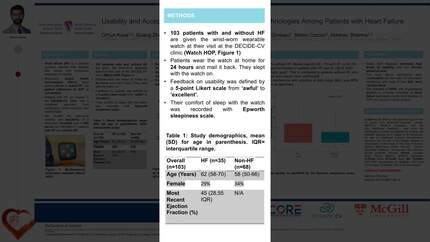
Wearable technologies to predict and prevent and heart failure hospitalizations: a systematic review
European Heart Journal - Digital Health


Abstract
Heart failure (HF) is a global pandemic and accounts for substantial morbidity and healthcare expenditure, largely due to frequent hospitalizations. While traditionally HF patients are followed with intermittent clinical assessments, wearable technologies offer continuous, real-time monitoring, potentially enabling earlier detection and tailored interventions to prevent hospitalization. This systematic review evaluates the impact of non-invasive wearable devices on hospitalizations in HF. Following PRISMA guidelines, literature searches were conducted in PubMed and Scopus using keywords related to HF, hospitalization, and wearable technology on 1 March 2024, and re-run on 3 December 2024. Studies assessing the link between wearable devices and HF-related hospitalization rates were included. Data extraction covered population characteristics, study design, type of device, and hospitalization rates. Risk of bias was assessed using ROBINS-I and ROB-2 tools. Meta-analysis was attempted but not performed due to significant heterogeneity (
Contributors

Francesca Noci
Author
Angelo Capodici
Author
Sabina Nuti
Author
Claudio Passino
Author
Michele Emdin
Author
Alberto Giannoni
Author
You may be interested in