Trends in risk factors among young patients with acute myocardial infarction: a nationwide cohort study
European Heart Journal - Quality of Care and Clinical Outcomes


Abstract
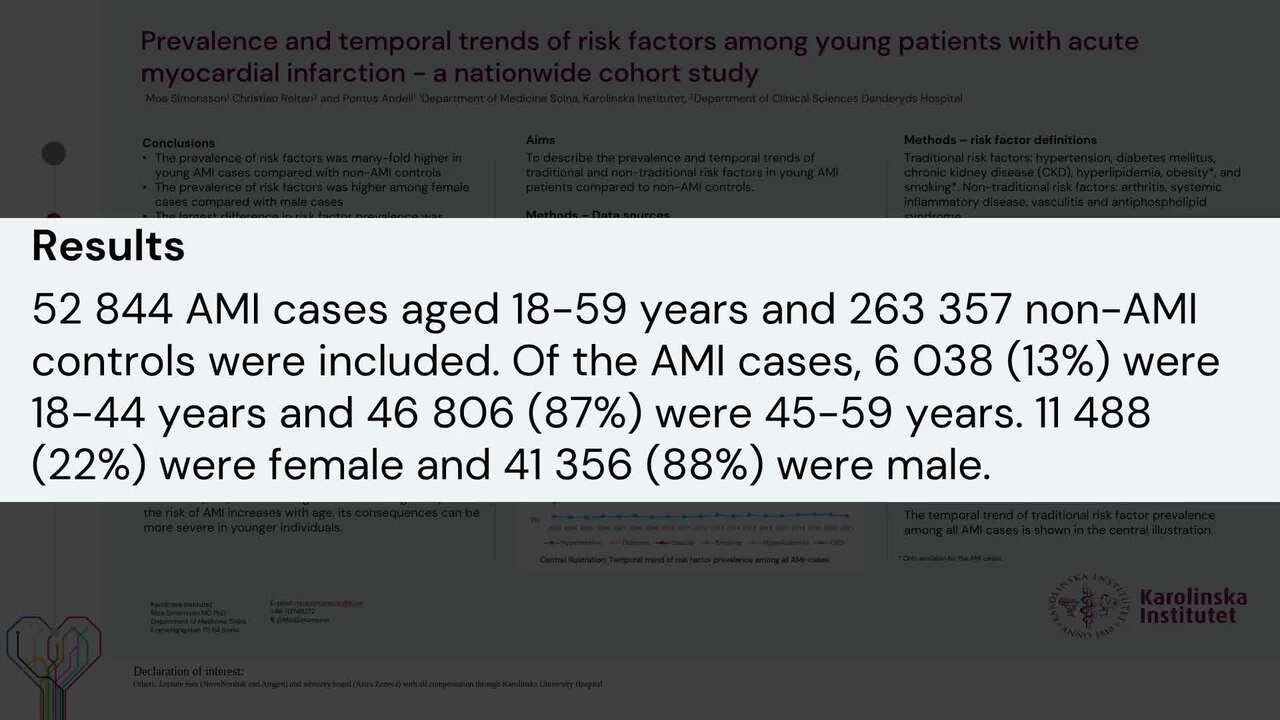
Acute myocardial infarction (AMI) is associated with significant loss-of-life expectancy, particularly among younger females. Addressing risk factors is crucial for optimizing prevention strategies. The aim of this study was to describe the trends in risk factors and clinical outcomes in a nationwide cohort of young AMI patients stratified by sex.
Using Swedish registries, we included AMI patients aged 18–59 and selected five matched non-AMI controls from the general population. Risk factors included hypertension, diabetes, chronic kidney disease, hyperlipidaemia, obesity, smoking and systemic inflammatory disease. Clinical outcomes were major adverse cardiovascular events (death, AMI, stroke, or heart failure) and bleeding events. From 2006 to 2021, 44 254 AMI cases (9602 females and 34 652 males) and 220 721 non-AMI controls (47 967 females and 172 754 males) were included. Among AMI cases, the prevalence of at least one risk factor was higher in females than males (78.9 vs. 73.7%). Obesity increased from 25.2 to 35.5% becoming the most common risk factor. The risk of clinical outcomes was higher in cases than controls and in females compared with males among the cases, but lower among females compared with males among the controls. Five-year mortality was 6.1 vs. 1.3% in females and 4.9 vs. 1.8% males (cases vs. controls).
Three in four young AMI patients have at least one known risk factor, of which obesity is the most common. Risk factor burden and clinical outcomes are worse among females. Prevention strategies and enhanced follow-up for young AMI patients should be prioritized. Further studies are needed to investigate sex-specific risk factors.
Contributors

Moa Simonsson
Author
Moman A Mohammad
Author
Sofia Sederholm Lawesson
Author
Robin Hofmann
Author

Christian Reitan
Author
Pontus Andell
Author
You may be interested in