Staggered use of sodium nitroprusside and levosimendan in a patient with refractory cardiogenic shock: a case report
European Heart Journal - Case Reports


Abstract
Cardiogenic shock (CS) is a complex syndrome characterized by inadequate tissue perfusion due to reduced cardiac output resulting from a wide array of underlying causes. It is generally an acute and devastating condition with short-term mortality ranging from 30% to 40% and 1-year mortality around 50%.
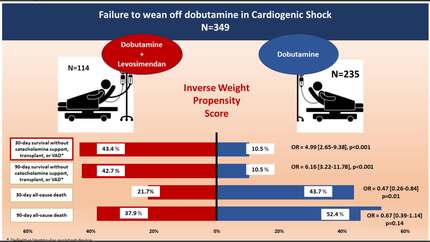
A 31-year-old previously healthy male presented with progressive dyspnoea, fatigue, and signs of low perfusion, ultimately developing CS requiring ICU admission. Transthoracic echocardiography revealed severe left ventricular dysfunction (left ventricular ejection fraction 18%) with diffuse hypokinesia and moderate functional mitral regurgitation (Type IIIb). Despite high-dose inotropic support (dobutamine, milrinone) and vasopressors, the patient remained in refractory shock. A therapeutic trial with sodium nitroprusside led to transient haemodynamic improvement, followed by a secondary deterioration. Due to unavailability of immediate mechanical circulatory support (MCS), levosimendan was initiated at 0.1 μg/kg/min (without loading dose), resulting in rapid and sustained clinical improvement and weaning from vasoactive agents.
Given the heterogeneous nature of CS and the various physiological derangements, several vasoactive medications may be attempted to try to stabilize or reverse the haemodynamic picture with or without the installation of MCS. These devices have evolved as novel treatment strategies to restore systemic perfusion to allow cardiac recovery in the short-term. But, this case demonstrates the potential of combining vasodilator and inotropic therapies—specifically dobutamine and milrinone with sodium nitroprusside and levosimendan—as a bridge strategy in severe CS when MCS is not feasible.
Contributors

Andre Rodrigues Duraes
Author
Yasmin de Souza Lima Bitar
Author
Costantino Mancusi
Author
Alessandro Galluzzo
Author
Deepti Ranganathan
Author
You may be interested in