Successful upfront combination therapy against pulmonary arterial hypertension associated with unilateral absence of the pulmonary artery: a case report
European Heart Journal - Case Reports


Abstract
Unilateral absence of the pulmonary artery (UAPA), a rare congenital condition, is associated with pulmonary hypertension in 25% of cases.
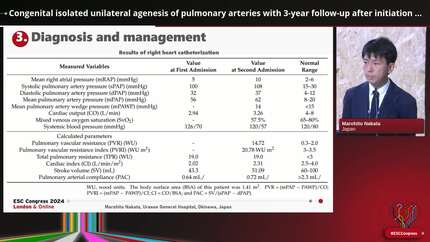
A 67-year-old Japanese woman presented with UAPA and progressive severe pulmonary arterial hypertension. During hospitalization for acute coronary syndrome 8 years ago, the patient experienced apnoea. A polysomnography test confirmed obstructive sleep apnoea syndrome. Home oxygen therapy (1 L/min) and continuous night-time positive pressure breathing therapy were initiated. Dyspnoea on exertion gradually worsened 1 year ago. The estimated right ventricular systolic pressure (RVSP) on echocardiography was elevated (73 mmHg). She was urgently admitted with progressive dyspnoea (World Health Organization [WHO] class II to class IV) and marked hypoxaemia, even when receiving oxygen (3 L/min). Isolated left UAPA with severe pulmonary hypertension was diagnosed based on right heart catheterization (RHC). The patient declined continuous subcutaneous prostacyclin analogue injection. Therefore, triple therapy with macitentan (10 mg), selexipag (0.4 mg), and riociguat (3 mg) was initiated. However, RVSP remained high during the first 3 months. The selexipag dose was titrated to 3.2 mg/day over 6 months, which improved RVSP to 32 mmHg on echocardiography and the mean pulmonary artery pressure on RHC decreased to 39 mmHg. One year later, due to recurrent dyspnoea on light exertion, iloprost inhalation therapy was initiated. The patient has since progressed well, maintaining WHO class II during a 7-year follow-up period.
Prostacyclin inhalation combined with triple therapy can be an effective treatment strategy for patients with UAPA-associated pulmonary arterial hypertension.
Contributors

Shoya Ono
Author
Takushi Sugiyama
Author
Hiroshi Harasawa
Author
Takanori Yasu
Author
Christoph Vandenbriele
Author
Josip Andelo Borovac
Author
Keyvan Karimi Galougahi
Author
Niklas Schenker
Author
You may be interested in