An atypical presentation of Wellens’ syndrome with critical right coronary artery stenosis instead of left anterior descending artery stenosis: a case report
European Heart Journal - Case Reports


Abstract
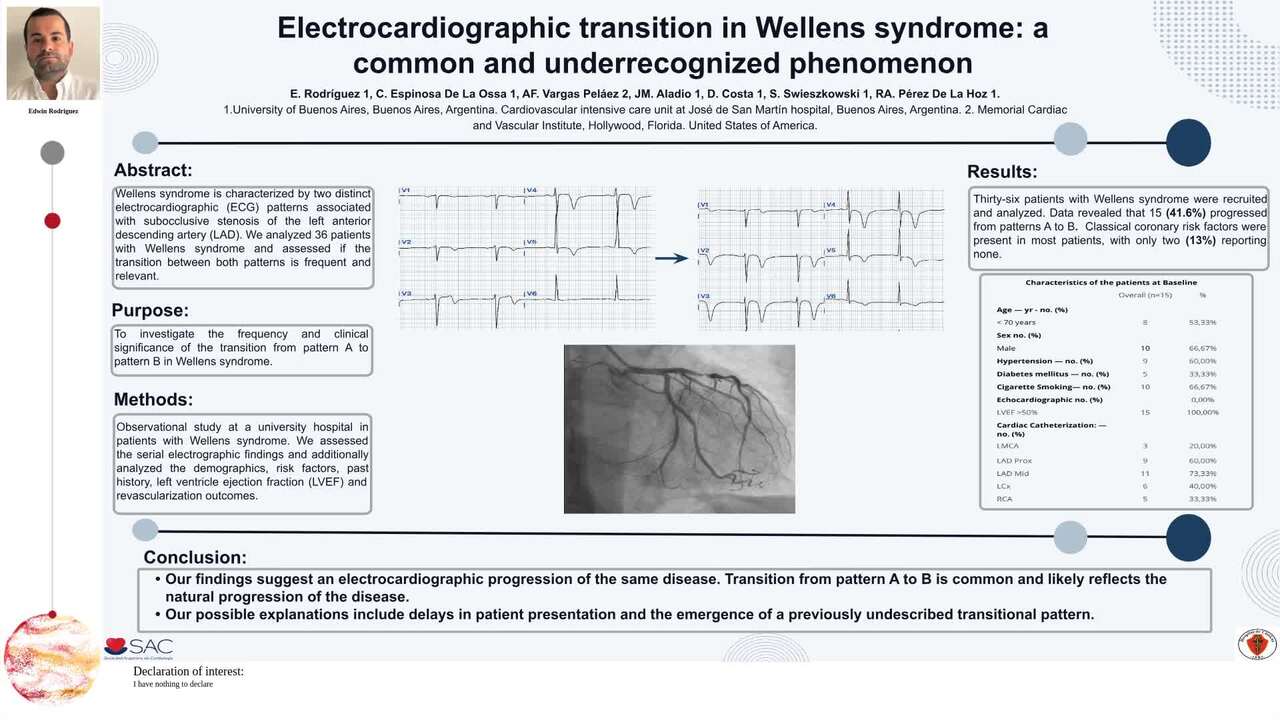
Wellens’ syndrome is identified by specific electrocardiographic changes biphasic or deeply inverted T waves in the precordial leads that are strongly associated with significant stenosis of the left anterior descending artery (LAD). This syndrome is regarded as a high-risk indicator of impending anterior wall myocardial infarction. While the classic association is with LAD stenosis, atypical presentations involving other coronary arteries, such as the right coronary artery (RCA), are uncommon but significant.
A 71-year-old male presented with exertional chest pain radiating to his back, which was relieved by rest. The patient had hypertension for 15 years and type 2 diabetes, which has been poorly controlled for 6 years. He also had a long history of using Khat, which may have contributed to his cardiovascular risk profile. Biphasic T waves in leads V2–V6 were detected on initial electrocardiography, which was consistent with Wellens’ syndrome Type A.
Although Wellens’ syndrome is classically associated with LAD stenosis, coronary angiography revealed a significant occlusion of the RCA rather than the LAD. The patient underwent successful percutaneous coronary intervention, requiring the implantation of two drug-eluting stents in the proximal and distal RCA. He showed significant clinical improvement following the procedure.
This case demonstrates an unusual and unexpected presentation of Wellens’ syndrome, in which the classic electrocardiographic findings of LAD ischaemia were mistaken for RCA involvement. The case emphasizes the significance of a thorough and comprehensive cardiac evaluation, as electrocardiographic findings do always correlate with the underlying coronary anatomy with rare exceptions. Although Wellens’ syndrome is most commonly associated with proximal LAD stenosis, RCA occlusion can cause similar ischaemic changes. This case serves as a reminder that in Wellens’ syndrome patients, alternative coronary pathologies should be considered, and prompt coronary angiography is critical for accurate diagnosis and optimal management.
Contributors

Can Baba Arın
Author
Mohamed Omar Hassan
Author
Ishak Ahmed Abdi
Author
Said Abdirahman Ahmed
Author
Ahmed Elmi Abdi
Author
Roman Komorovsky
Author
Muhammad Usman Shah
Author
Dzan Horozic
Author
Stefano Bordignon
Author
Emmanouil Mantzouranis
Author
You may be interested in