Fulminant Takotsubo syndrome with cardiogenic shock and mitral-edge-to-edge repair in new severe secondary mitral valve regurgitation after elective implantation of a cardiac resynchronization therapy: a case report
European Heart Journal - Case Reports


Abstract
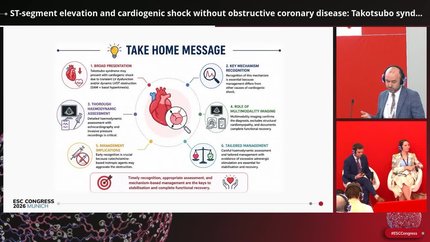
Takotsubo syndrome is a cardiac disease typically characterized by transient ventricular dysfunction. Although long considered benign due to the often reversible course, severe cases, including cardiogenic shock, may occur partially due to cardiac complications, such as severe secondary mitral regurgitation.
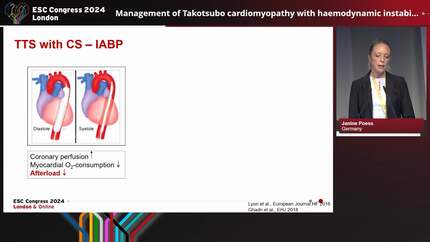
An 81-year-old female patient presented for the elective implantation of cardiac resynchronization therapy (CRT) in preparation of a His-ablation for therapy-refractory, highly symptomatic, paroxysmal atrial fibrillation. Postoperatively, she developed increasing haemodynamic instability, progressing to cardiogenic shock. Echocardiography ruled out pericardial effusion but showed newly developed, significantly reduced left ventricular function as well as new severe secondary mitral regurgitation. Relevant coronary stenosis was ruled out by coronary angiography. Invasive levocardiography revealed the typical pattern of Takotsubo syndrome. Haemodynamic stabilization was achieved by mechanical circulatory support, using the Impella CP device. Attempts to gradually reduce the support level repeatedly failed due to worsening of the mitral regurgitation resulting in pulmonary oedema. Therefore, with no signs for recovery of left ventricular function at that time and considering the patient’s severe symptom burden, an urgent mitral edge-to-edge repair was performed with successful reduction of mitral regurgitation. The haemodynamic situation subsequently stabilized, allowing for the successful weaning and eventually removal of the temporary circulatory support after 5 days. Left ventricular function eventually showed near-complete recovery after 15 days.
Even after elective cardiac procedures, such as CRT implantation, fulminant Takotsubo syndrome should be considered as a differential diagnosis in cases of haemodynamic instability. Then, temporary mechanical circulatory support and interventional treatment of secondary complications, such as secondary mitral regurgitation, may be necessary for stabilization.
Contributors

Roland Schmitz
Author
Christian Burger
Author

Thomas Arentz
Author
Christoph Sinning
Author
Francesco Lo Iudice
Author
Nisha Mistry
Author
Abdullah Abdullah
Author
You may be interested in