Native T1 mapping times are strongly influenced by elite athlete status
European Heart Journal - Cardiovascular Imaging


Abstract
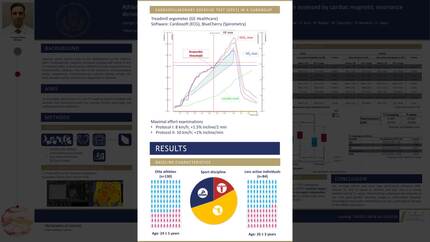
Limited data indicates that athletes’ hearts demonstrate decreased native T1, but this assertion has not been replicated in large cohorts of extreme phenotypes of elite athletes. Therefore, we investigated differences in native T1 between elite athletes and healthy non-athletic controls.
Cross-sectional analysis comparing native T1 between elite athletes (≥16 years; ≥10 h of exercise/week) and age-matched healthy non-athletic controls. All participants underwent cardiovascular magnetic resonance imaging on a 1.5 tesla MRI machine. We included 240 elite athletes [50% women; age 28 years (25–32)] and 80 non-athlete healthy controls [50% women; age 28 years (23–39)]. Elite athletes demonstrated lower native T1 than non-athlete healthy controls (960 ± 21 ms vs. 983 ± 26 ms,
Elite athletes have lower native T1 compared with non-athletes, both in women and men. Athlete- and sex-specific reference ranges should be applied when interpreting native T1 in athlete populations, especially in female athletes.
Contributors



Maarten A van Diepen
Author
Juliette C van Hattum
Author
Raschel D van Luijk
Author
Maarten H Moen
Author
Jules L Nelissen
Author
Aart J Nederveen
Author
R Nils Planken
Author
Adrienne van Randen
Author
S Matthijs Boekholdt
Author
Maarten Groenink
Author

Folkert W Asselbergs
Author
Amsterdam University Medical Centre (AUMC) Amsterdam , Netherlands (The)
Harald T Jørstad
Author
You may be interested in