Prognostic value of myocardial perfusion imaging in asymptomatic high-risk diabetic patients: 10-year follow-up of the prospective multicentre BARDOT trial
European Heart Journal - Cardiovascular Imaging


Abstract
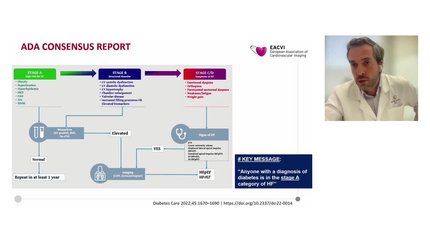
Patients with type 2 diabetes mellitus (T2DM) are at high risk for coronary artery disease (CAD) related events and are often asymptomatic. The role of cardiac imaging in screening asymptomatic T2DM patients remains controversial, as existing studies are limited by short follow-up periods. Therefore, study aim was to provide long-term (10 years) outcome data of T2DM patients screened with cardiac imaging.
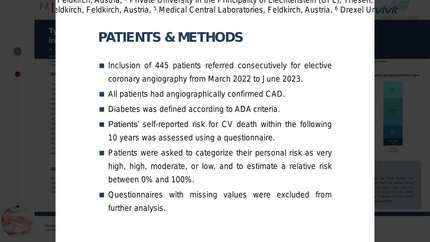
A total of 400 asymptomatic high-risk T2DM patients without history of CAD underwent screening with Single Photon Emission Computed Tomography (SPECT). Abnormal SPECT was defined as Summed Stress Score ≥ 4 or Summed Difference Score ≥ 2. Patients were followed for all-cause mortality and major adverse cardiovascular events (MACE, cardiovascular mortality + myocardial infarction).
The mean age was 63 ± 8 years; 69% were male. Diabetic end-organ damage was present in 87% of patients. Baseline SPECT was abnormal in 22% of patients. Median follow-up was 11.1 (8.8, 12.8) years. Abnormal SPECT was associated with higher all-cause mortality [hazard ratio (HR) 1.614,
A normal SPECT was associated with an excellent long-term prognosis in high-risk T2DM patients. Hence, SPECT could serve as a valuable tool for advanced risk stratification in this population.
Contributors

Kathrin Thommen
Author

Daniel Kammerer
Author
Damian Wild
Author
Philip Haaf
Author
Felix Mahfoud
Author

Jan Müller-Brand
Author
Miriam Brinkert
Author
Thilo Burkard
Author
Federico Caobelli
Author
Stefanie von Felten
Author
Gianluca Haenny
Author
Raban Jeger
Author
Ulrich Keller
Author
Michael Mauraun
Author
Hans H Osterhues
Author
Otmar Pfister
Author
Matthias Pfisterer
Author
Naina Rastalksy
Author
You may be interested in