Revolutionizing physical activity in athletes at risk of sudden cardiac death: PAC-SAMS project in Spain
EP Europace Journal


Abstract
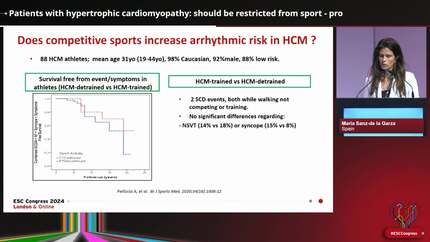
Inhereted arrhythmia syndromes in young athletes (Spanish abbreviation SAMS "sindromes asociados a la muerte subita) carry a high risk of cardiac events during adrenergic activity, leading to restrictions on competitive physical activity. However, recent studies suggest that, under proper supervision, exercise may be safe and beneficial. PAC-SAMS project aims to redefine physical activity limits for this high-risk population.
To implement a personalized and safe physical activity program in SAMS patients, minimizing cardiovascular risks.
A prospective, non-randomized interventional study was conducted over a 9-month period in SAMS patients under 35 years of age. Clinical, physical, nutritional, and psychological parameters were assessed both before and after the program. Assessments included ECG, echocardiography, 5-day Holter monitoring, cardiopulmonary exercise testing, and nutritional and psychological evaluations, along with continuous monitoring using wearable devices.
Nineteen athletes with SAMS-D were recruited (mean age 17±5 years). Personalized protocols were developed for 9 patients with hypertrophic cardiomyopathy (HCM), 4 with arrhythmogenic cardiomyopathy (ACM), 2 with long QT syndrome (LQTS), 2 with idiopathic ventricular fibrillation (IVF), and 1 with dilated cardiomyopathy (DCM). Three dropped out of the program. After 6 months, no significant changes in cardiac parameters or arrhythmic events were observed. Physical improvements included weight reduction (7%) and an increase in muscle mass (5-10%), as well as a 100% adoption of healthier lifestyle habits and improved well-being perception.
PAC-SAMS is the first national project aimed at changing the paradigm of sports in patients with SAMS. This personalized program enhances physical condition and well-being, challenging traditional restrictions. We intend to conduct follow-up with another evaluation one year after the project’s completion. Our goal is to expand it nationally and across Europe to optimize management for these patients and continue exploring the boundaries of safe exercise for this high-risk population.
Contributors

A Greco
Author
E Ferrer Vidal-Barraquer
Author
E Arias Labrador
Author
P Solana Comas
Author
E Martinez-Barrios
Author
J Brugada Terradellas
Author
F Merchan Pinto
Author
F Chipa Ccasani
Author
O Campuzano Larrea
Author
G Sarquella-Brugada
Author
You may be interested in