Digital health in the EP lab: early experiences, safety, feasibility and sustainibility of remote support for complex ablations procedures - results of the REMOTE-VA Study
EP Europace Journal


Abstract
The catheter ablation (CA) has become the cornerstone for managing ventricular arrhythmias (VA). Field technical engineers (FTEs) operate the electroanatomical mapping (EAM) systems on-site in the majority of electrophysiology (EP) labs. The FTEs typically have to travel between different hospitals due to a shortage of qualified workers and the procedures need to be scheduled ahead of time. The use of remote support (RS) to guide VA ablations has the potential to increase flexibility, reduce travel times, maximise healthcare resources.
To evaluate the safety and feasibility of RS as compared to on-site support guided CA for VA.
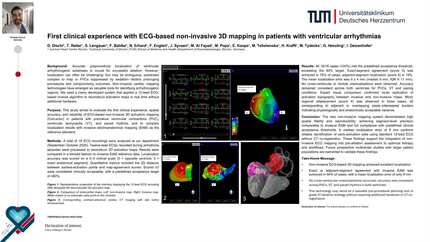
Consecutive patients who underwent ventricular tachycardia (VT) or premature ventricular complex (PVC) ablation using RS were included (RS group). An equal number of patients matched for the type of procedure, receiving on-site assistance made up the control group. The RS guided three-dimensional (3D) mapping was obtained by connecting the EAM software with an integrated audio-visual solution. High-resolution cameras and headphones with a stable internet connection made it possible for the operator and the FTE, who worked solely from home office, to communicate. The hospital's electronic system was checked for readmissions, unscheduled ambulatory presentations, and emergency department (ED) visits within 30 days postprocedural.
Between September 2022 and August 2024, a total of 53 patients underwent VT (43%) or PVC (57%) ablation in our centre using RS and were compared to 53 patients undergoing the same procedures with on-site support. There was no difference between the two groups regarding the demographic data.
The median procedure time was 135.5 (105.8, 167.5) minutes in the RS group and 143.0 (116.5, 166.5) minutes in the control group (p=0.718), while the fluoroscopy time was 10.6 (6.3, 13.0) and 7.0 (4.6, 10.0) minutes respectively (p=0.011). The RS group achieved a procedural success of 98%, compared to 100% in the on-site group. In the RS group, eight patients underwent epicardial VT ablation and another one bipolar ablation for VT storm. No major technical issues or changes to on-site support were reported.
Two (3.7%) intraprocedural complications were noted among the RS patients, while three (5.6%) complications occurred in the control group (p=0.618). A total of 22.6% of the RS and 18.8% of the control patients developed complications until discharge. Six (11.3%) patients in the RS group and three (5.6%) in the control group had ED visits, while three patients of each group had an unplanned ambulatory presentation. A total of 4% of the patients in the RS group and 7.5% of those in the control group were hospitalised postprocedural. The RS procedures reduced the CO2 emissions with 5.2 tons.
This is the largest study on the safety and feasibility of RS VA ablations. The RS approach contributes to a more sustainable environment while optimizing healthcare resources. Demographic and procedural data Peri- and postprocedural complic
Contributors

B I Botezat
Author
S S Popescu
Author
J Vogler
Author
C Eitel
Author
C H Heeger
Author
J P Wenzel
Author
E Yaman
Author
R Mamaev
Author
K H Kuck
Author
R R Tilz
Author
You may be interested in