Economic and clinical impact of diagnostic sensitivity for insertable cardiac monitors in the United Kingdom
EP Europace Journal


Abstract
Implantable cardiac monitors (ICMs) are recommended by international clinical guidelines for prolonged cardiac monitoring in patients with cryptogenic stroke (CS). Only the LINQ ICM has been recognised as cost effective by the National Institute for Health and Care Excellence (NICE) for this indication. Other ICMs may vary in diagnostic sensitivity and therefore yield. It is unclear whether this might impact patient outcomes and cost-effectiveness.
This study aims to quantify the clinical and economic impacts of different diagnostic sensitivity levels in ICMs for detecting atrial fibrillation (AF) in CS patients, from the perspective of UK National Health Service (NHS).
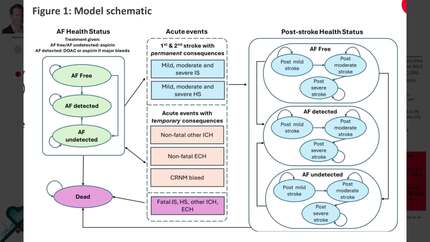
We built a Markov model with a three-month cycle and a lifetime horizon for cost-effectiveness analysis. Patient characteristics and detection probabilities were taken from the CRYSTAL-AF trial, comparing ICM use with Standard of Care (SoC) of conventional follow up while factoring in NHS resource costs. Outcomes were measured in quality-adjusted life years (QALYs) and incremental cost-effectiveness ratios (ICERs), with costs and health benefits discounted at 3.5% annually. Upon detection of AF, patients transitioned to direct oral anticoagulants to prevent secondary strokes. The risks of cerebrovascular events were based on AF detection status and CHADS2 scores. Scenario analyses examined various ICM duration sensitivity levels. Uncertainties were explored through deterministic and probabilistic sensitivity analyses.
LINQ ICM, compared to SoC, resulted in an ICER of £8,670 per QALY, well below the NICE willingness-to-pay threshold of £20,000-£30,000. Compared to an ICM with 20 percentage points lower sensitivity, LINQ ICM detected an additional 0.063 AF cases, prevented 0.016 more strokes, and saved £208 per patient in stroke-related costs. It was 35% more likely to detect AF, leading to a 6.4% reduction in the odds of recurrent IS and a 3.5% decrease in stroke-related costs. The lower sensitivity ICM yielded 0.051 fewer QALYs with an ICER of £11,392 per QALY compared to SoC. These results remained robust under sensitivity analyses.
Diagnostic sensitivity substantially impacts cost-effectiveness and clinical outcomes for ICMs. LINQ ICM is more cost-effective for CS patients from the UK NHS perspective. It detects more AF cases and reduces the risk of recurrent IS and costs associated with strokes. In contrast, lower sensitivity ICMs are less effective at detecting AF, leading to increased stroke risks and costs, and are less cost-effective for prolonged cardiac monitoring. Markov Model Schematic Summary Results
Contributors

You may be interested in