Inducibility of sustained ventricular tachycardia under conscious sedation
EP Europace Journal


Abstract
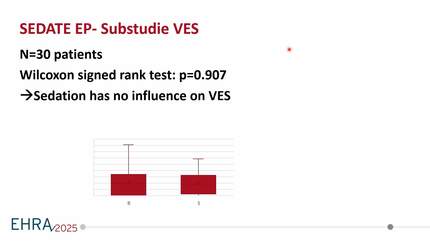
Anesthetic management during ventricular tachycardia (VT) catheter ablation (CA) varies from minimal sedation to general anesthesia (GA). Data on VT inducibility of the patients who underwent CA under conscious sedation (CS) are limited.
Data of all patients, who underwent CA of VT at our hospital between 01/ 2022 and 10/2024 were prospectively included. All patients undergone CA under CS with propofol and fentanyl or midazolam when needed. VT induction protocol was performed in all procedures. Two groups were defined: inducibility vs non-inducibility of sustained VT. Localisation of low voltage areas was obtained in offline analysis, according to the 17-segment model. Correlation of VT morphology, pre-und periprocedural parameters as well as endocardial low voltage areas with VT inducibility was assessed.
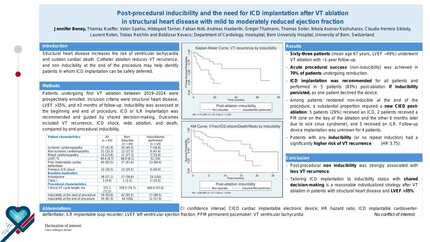
A total of 116 procedures in 95 patients (1.2 procedures per patient), mean age 64 (53.75-72) years, 95 (82%) male, 55 (47%) ischemic cardiomyopathy [ICM]). Fentanyl was used in 114 (98%), midazolam in 11 (9%) of procedures. Sustained VT could be induced in 86 (74.1%) patients. Univariate analysis showed, LV ejection fraction ≤ 30% (p=0.004) and NTproBNP level >125 ng/ml (p=0.041) were associated with inducibility of sustained VT. No difference was showing regarding the underlying disease (ICM or non ICM). The individual segments of low voltage did not differ in patients with or without VT induction, with the exception of segment 16. In procedures with inducibility of sustained VT, significant more low voltage was identified in this segment. Overall low voltage substrate was observed more frequently in septal segments in patients with inducible VT than in those without (Figure 1).
In most patients sustained VT could be induced under CS independent of the underlying disease. Lower LVEF, higher NT-proBNP level and low voltage in apical lateral segment were associated with VT induction.
Contributors

V Maslova
Author
T Kannenberg
Author
J Nebendahl
Author
A Uckermark
Author
S Lange
Author
F Moser
Author
A Zaman
Author
D Frank
Author
E Lian
Author
You may be interested in