Randomized, double-blind, placebo-controlled, efficacy and safety study of etripamil self-administration for the termination of episodes of paroxysmal supraventricular tachycardia in chinese patients
EP Europace Journal


Abstract
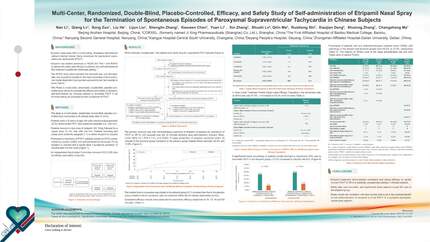
Etripamil nasal spray (NS) is a fast-acting, intranasally administered calcium-channel blocker being developed for paroxysmal supraventricular tachycardia (PSVT). This Phase 3, multi-center, randomized, double-blind, placebo-controlled study aimed to evaluate the efficacy and safety of etripamil, self-administered by Chinese patients to terminate PSVT in an at-home setting as prompted by their symptoms of PSVT.
Patients were ≥18 years of age with prior electrocardiographically (ECG) documented PSVT and sustained episodes (i.e., ≥20 min). Patients received a test dose of etripamil NS 70mg followed by a repeat dose 10 min later after the first. Patients tolerating test doses were randomly assigned (1:1) to either etripamil or placebo. Prompted by symptoms of PSVT, patients applied an ECG cardiac monitoring system (CMS) and self-administered intranasal 70 mg etripamil or placebo and, if symptoms persisted beyond 10 min, a repeat dose was administered. An independent Adjudication Committee reviewed ECG CMS data for efficacy and safety endpoints.
While medically unsupervised, 195 patients took study drug for a perceived PSVT episode; 168 were confirmed to be PSVT (84 etripamil arm, 84 placebo). The primary endpoint was met, demonstrating superiority of etripamil vs placebo for conversion of PSVT to SR for ≥30 seconds over the 30 minutes following drug administration (Hazard Ratio, 3.002 [95% CI,1.578-5.711]; p=0.0005). Kaplan-Meier estimates for conversion by 30 minutes 40.5% (etripamil) vs 15.9% (placebo). Consistent efficacy results were observed for secondary efficacy endpoints at 10, 15, 45 and 60 minutes. A significantly lower percentage of patients sought emergency department (ED) care to terminate PSVT in the etripamil group (13.1%) compared to placebo (44.0%). Proportions of patients with any treatment-emergent adverse event (TEAE) (24h post-drug) in the placebo and etripamil groups were 37.4% vs 32.3%, respectively. The majority of TEAEs were at the nasal administration site and mild. There were no severe TEAEs.
Etripamil treatment demonstrated consistent and robust efficacy to rapidly convert PSVT to SR in a medically unsupervised setting in Chinese patients. Safety data were favorable, and significantly fewer patients sought ED care in the etripamil group. These results are consistent with prior studies and support the potential self-administration of etripamil to treat PSVT in a symptom-prompted, repeat-dose regimen. kaplan-meier analysis in a time window Summary of Adverse Events

You may be interested in