Renal outcomes in patients with atrial fibrillation undergoing catheter ablation: a population-based study
EP Europace Journal


Abstract
Atrial fibrillation (AF) is associated with development of impaired renal function and chronic kidney disease (CKD)
This study aimed to assess the effects of catheter ablation on renal function in patients with AF, compared with medical therapy.
This population-based cohort study included 27,620 patients with AF and available baseline estimated glomerular filtration rate (eGFR) data, from the Korean National Health Insurance Service database, undergoing catheter ablation or medical therapy (antiarrhythmic or rate control drugs) in 2005–2015. Patients with end-stage renal disease were excluded. The composite outcome of ≥30% decline in eGFR, acute kidney injury, kidney failure, or death from renal or cardiovascular causes was compared between ablation and medical therapy using propensity score overlap weighting.
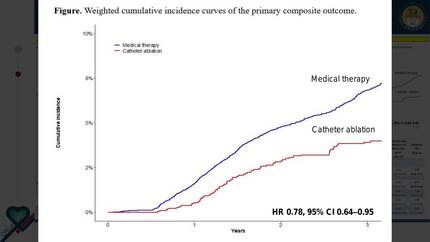
In the study population (33.1% female; median age: 62 years), 2,083 (7.5%) underwent catheter ablation for AF during the study period. During a mean follow-up of 4.0 (IQR 2.6–5.5) years, a total of 3,507 composite outcomes occurred including 396 deaths from cardiovascular or renal causes. . Catheter ablation, compared with medical therapy, was associated with lower risks of the primary composite outcome (weighted incidence rate: 1.88 vs. 2.41 per 100 person-years; weighted HR 0.78, 95% CI 0.64–0.95) and eGFR decline ³30% (weighted HR 0.77, 95% CI 0.62–0.96). The protective association between catheter ablation and the composite outcome was consistent irrespective of baseline renal function and more pronounced in cases of ablation success whereas no significant difference was observed in cases of ablation failure.
Among patients with AF, catheter ablation was associated with a lower risk of progression of kidney disease, compared with medical therapy.

You may be interested in