Efficacy of semaglutide in reducing atrial fibrillation recurrence post-catheter ablation: propensity score-matched analysis
EP Europace Journal


Abstract
Semaglutide is a GLP-1 agonist that modulates metabolism, induces significant weight loss, and has demonstrated substantial cardiovascular benefits. It significantly reduces the risk of developing atrial fibrillation (AF) in high cardiovascular-risk individuals, irrespective of administration route (oral or subcutaneous), underlying diabetes, or BMI. However, it remains unclear whether semaglutide use is associated with a reduced risk of AF recurrence following transcatheter ablation.
To assess the efficacy of semaglutide as an adjunct therapy for reducing AF recurrence risk in patients undergoing transcatheter ablation.
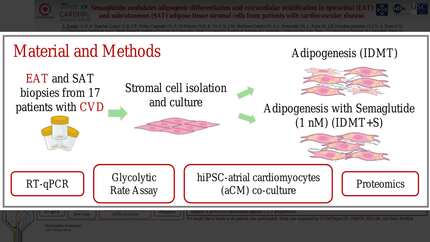
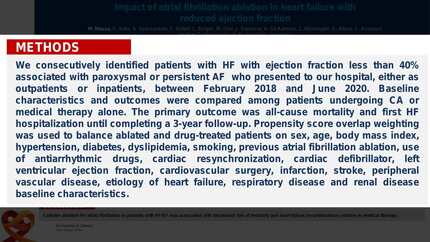
This retrospective study, initiated in May 2020 at a tertiary Italian centre, compared a cohort of patients who began semaglutide therapy within three months before or after AF ablation to a propensity score-matched cohort of patients who underwent ablation but had never received GLP-1 agonists. Freedom from any atrial tachyarrhythmia (ATa) recurrence after a 3-month blanking period (BP) was assessed using implantable cardiac monitors (ICM), ECG-Holter, or smartwatches.
A total of 53 patients (73.6% male, mean age 56.4 ± 10.2 years) in the semaglutide group were matched by propensity score to 53 control patients. There were no statistically significant differences in age, sex, BMI, type 2 diabetes (DMT2), heart failure (HF), left atrial (LA) volume/body surface area (BSA), or coronary artery disease (CAD) between the two groups. Semaglutide patients had slightly higher rates of hypertension (74% vs 54%). At 12-month follow-up, semaglutide patients showed greater freedom from atrial arrhythmias than the non-semaglutide group (90.6% vs 71.7%, P = 0.013).
Semaglutide use is associated with a reduced risk of AF recurrence after catheter ablation in a propensity score-matched cohort, indicating its potential as an adjunctive treatment to reduce AF recurrence following ablation. Further studies are needed to confirm these findings and elucidate the effects of GLP-1 agonists on AF recurrence.
Contributors

R Salerno
Author
G Ciconte
Author
G Negro
Author
G Rondine
Author
A Boccellino
Author
V Maiolo
Author
M Gamardella
Author
L Giannelli
Author
A Fuga
Author
A Vuturo
Author
A Izzo
Author
D Morciano
Author
Z Calovic
Author
C Pappone
Author
You may be interested in