Acute neuromodulation during pulsed field and radiofrequency ablation in patients with paroxysmal atrial fibrillation
EP Europace Journal


Abstract
Pulsed Field Ablation (PFA) represents a novel, energy approach for pulmonary vein isolation (PVI) in atrial fibrillation (AF) patients, differing from traditional thermal ablation such as radioquency ablation (RFA) for its tissue selectivity and impact of surrounding structure. The impact of these methods on the cardiac autonomic nervous system (ANS), particularly concerning the modulation of blood pressure (BP) and heart rate (HR), remains poorly explored.
This study aimed to evaluate the effects of PFA compared to RFA on the ANS, specifically by assessing intraprocedural BP and HR variations.
We analyzed consecutive patients from our prospective registry from January to June 2024, undergoing first-time paroxysmal AF ablation with either PFA or RFA. The effects on ANS were assessed by monitoring BP peaks throughout the entire procedure.
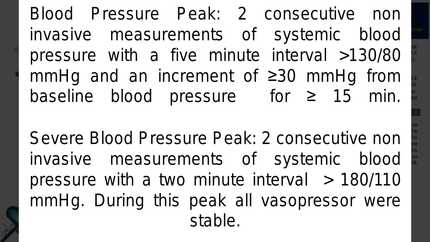
Blood Pressure Peak: 2 consecutive non invasive measurements of systemic blood pressure with a five minute interval >130/80 mmHg and an increment of ≥30 mmHg from baseline blood pressure for ≥ 15 min.
Severe Blood Pressure Peak: 2 consecutive non invasive measurements of systemic blood pressure with a two minute interval > 180/110 mmHg. During this peak all vasopressor were stable.
Additionally, HR was evaluated at three time points: before the procedure (t1), prior to discharge (t2), and at the three-month follow-up (t3).
We included 356 consecutive patients in our analysis. PFA and RFA was used in 209 (58.7%) and 147 (41.3%) of population respectively. Baseline and procedural caractheristics were similar between the 2 groups.
PFA demonstrated a significantly higher incidence of BP peaks compared to RFA (18.2% vs. 2.7%, p<0.001), with 3 (1.4%) severe peaks observed only in PFA group during ablation in the right superior PV.
Both ablation methods resulted in acute increases in HR before discharge [delta PFA (t1-t2) = 10.2±4.2 (p<0.001) and delta RFA (t1-t2) = 9.3±5.9 (p<0.001)].
However, the increase observed with RFA appeared to be more sustained, with HR remaining elevated at the three-month follow-up [delta PFA (t1-t3) = 1.3±1.5 (p=0.139) and delta RFA (t1-t3) = 6.2±4.2 (p<0.001)]. Fig.1
Our findings indicate that PFA results in acute autonomic changes, as evidenced by the variable BP trends observed during the procedure and the increase in heart rate before discharge. When compared to PFA, RFA seems to have a more lasting effect on ANS, as indicated by the sustained elevation in HR during follow-up.
Contributors

V La Fazia
Author
N P Nicola Pierucci
Author
C G Carola Gianni
Author
S M Sanghamitra Mohanty
Author
P G T Preem Geeta Torlapati
Author
W B Weeranun Bode
Author
M B Mohamed Bassiouny
Author
R H Rodney Horton
Author
A A A Amin Al-Ahmad
Author
L D B Luigi Di Biase
Author
A N Andrea Natale
Author
You may be interested in