Statseal venous closure device facilitates early ambulation following cryoablation of atrial fibrillation
EP Europace Journal


Abstract
Atrial fibrillation (AF) is often treated with cryoablation, frequently performed as a day case. Early patient mobilisation is a key factor for discharge. The Statseal disc is a novel closure device which uses a hydrophilic polymer and potassium ferrate to form a seal, reducing access site bleeding.
This study compares the effectiveness of the Statseal disc versus the modified figure-of-8 (mFO8) suture and three-way stopcock technique for venous closure following AF cryoablation.
A total of 66 consecutive patients undergoing AF cryoablation at a high-volume tertiary electrophysiology unit were included. Each patient underwent pulmonary vein isolation using a standardized approach: conscious sedation, ultrasound-guided vascular access with a 12F Flexcath and an 8F sheath, uninterrupted anticoagulation, transeptal puncture, heparinization (ACT > 300 seconds), 28mm cryoballoon, and a same-day discharge protocol. Haemostasis was achieved either with the Statseal disc or the modified mFO8 suture based on operator preference.
Patient baseline characteristics and post-operative vascular complications were recorded. The primary outcome was time-to-ambulation (TTA).
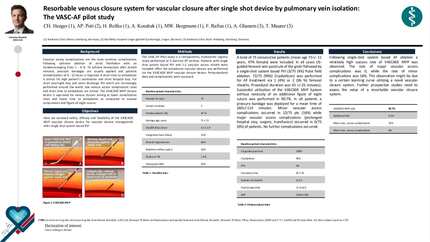
Of the 66 patients, 36 received the Statseal disc and 30 received the mFO8 suture. There were no statistically significant differences between the two groups in terms of age (61.55 ± 10.17 vs 62.23 ± 8.15, years), BMI (28.31 ± 4.69 vs. 29.66 ± 3.70 kg/m²), eGFR (75.03 ± 14.06 vs. 72.93 ± 14.06 mL/min/1.73m²), intra-procedural heparin dose (12777 ± 2768 vs. 11766 ± 2967 units), or protamine dosing (64 ± 22.91 vs. 57.14 ± 18.90 units). (Table 1)
The mean TTA was significantly shorter in the Statseal group (3.63 ± 1.20 hours vs. 5.09 ± 0.89 hours, p<0.01). (Figure 1) There were no major femoral bleeding complications requiring intervention in either group. There was one small haematoma in the F08 group.
The use of the Statseal disc significantly reduces time to ambulation compared with the mFO8 suture technique following AF cryoablation, with a low incidence of access-site complications in both groups. The Statseal device may facilitate same-day discharge, supporting improved outcomes for patients and healthcare systems alike.

You may be interested in