Evaluation of physical activity among patients with cardiac implantable electronic devices in a philippine tertiary government hospital
EP Europace Journal


Abstract
Cardiac Implantable Electronic Devices (CIED), a treatment option for arrhythmia and heart failure, present physical challenges for patients after implantation. Assessing physical activity is crucial to determine appropriate recommendations from physicians for rehabilitation, yet there is currently no data available on its the evaluation in the local setting.
The study aimed to determine the prevalence of low physical activity level among patients with CIED and to determine the impact of socio-demographic, clinical and device and arrhythmia profiles to physical activity level.
Methodology: This is a cross-sectional study in the setting of a pacemaker clinic of a tertiary hospital. Socio-demographic, clinical and arrhythmia and device profiles were obtained. Physical activity level was obtained using Global Physical Activity Questionnaire. The percentage of low physical activity level in relation to the different variables was determined using Chi square test and independent T test. Simple and multiple logistic regression analyses were done. Barriers to physical activity engagement, methods of coping and willingness to participate in cardiac rehabilitation were determined via focused interview.
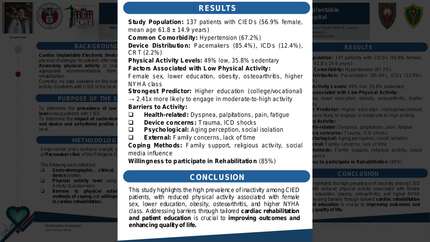
A total of 137 patients with CIEDs (56.9% females, mean age 61.8 ± 14.9 years) were studied. The prevalence of low physical activity level was 48.91%. Hypertension (67.2%) was the most common comorbidity. The majority had pacemakers (85.4%), with fewer implantable cardioverter-defibrillators (12.4%) and cardiac resynchronization therapy (2.2%). Lower education levels, female sex, obesity, osteoarthritis, and higher NYHA class were associated with low physical activity level. Educational attainment was the strongest predictor, with those having college or vocational education 2.41 times more likely to engage in moderate-to-high physical activity compared to those with lower education. Barriers to physical activity included concerns about symptoms (dyspnea, palpitations), device-related issues (trauma, ICD shocks), psychological factors (perception of being elderly, social isolation), physical limitations (pain, fatigue), system-related like family concerns and no time for exercise also contributed. Coping methods included family support, religious activity, and social media influence.
In conclusion, this study underscores the importance of evaluation of physical activity in CIEDs, as nearly half of the participants were inactive. Factors such as female sex, lower education, obesity, osteoarthritis, and higher NYHA class were associated with reduced physical activity. Barriers included symptoms, device-related concerns, psychological factors, and system-related constraints. Given the benefits of physical activity for cardiovascular health, tailored cardiac rehabilitation programs and patient education are essential to overcome these barriers and improve patient outcomes of CIED patients.
Contributors

A Nicolas
Author
M K P Maramara
Author
P V Cheng-Bromeo
Author
R A Roderos
Author
J A Salvan
Author
T A Aya-Ay
Author
J De Leon
Author
M M Pipo
Author
M J Agbayani
Author
G G Gervacio
Author
You may be interested in