Panoramic atrial mapping offers advantages in the treatment of persistent atrial fibrillation compared with standard pulmonary vein isolation
EP Europace Journal


Abstract
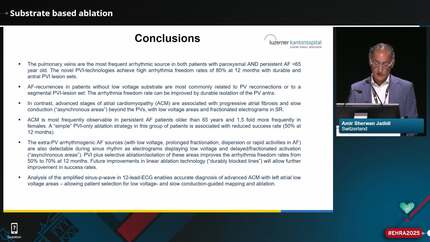
Atrial fibrillation (AF) is the most prevalent arrhythmia, moreover it increases the risk for stroke and heart failure. Pulmonary vein isolation (PVI) is the cornerstone of interventional treatment of paroxysmal atrial fibrillation. PVI provides suboptimal success rate in patients with persistent atrial fibrillation, and high rates of recurrence. Novel mapping technologies aim to distinguish non-PV sources of AF, therefore have the potential to improve outcome.
To test the hypothesis that targeted ablations detected by panoramic mapping are superior to PVI in this patient population.
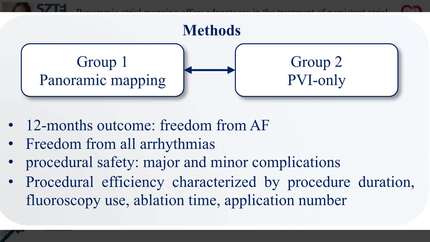
Patients included into the panoramic mapping group (Group1) were treated by either electrographic flow either, charge density mapping based mapping. In the control group (Group 2) patients underwent PVI-only. 12-months outcome of freedom from AF, procedural safety and efficiency characterized by procedure duration, fluoroscopy use, ablation time, application number were analyzed. Both intention-to-treat and per protocol analysis were conducted.
120 patients were treated (Group 1: 38 EGF, 66 CDM and Group 2: 16 PVI). Intention to treat analysis showed fewer AF recurrences in Group 1 than Group 2 (24.038% vs 62.5% p<0.01,). Panoramic mapping procedures lasted longer, but there were no differences in fluoroscopy and ablation times. There was no difference in complication rates between the groups (2.9% vs. 6.6% p=0.48).
Our data suggests that patients treated with panoramic mapping-based ablations had better arrhythmia free outcome, although these procedures require longer procedure times.
Contributors

You may be interested in