Inflammation and Fibrosis Markers Predict Adverse Outcomes in Arrhythmogenic Cardiomyopathy: An Integrated Multiomics Study
EP Europace Journal


Abstract
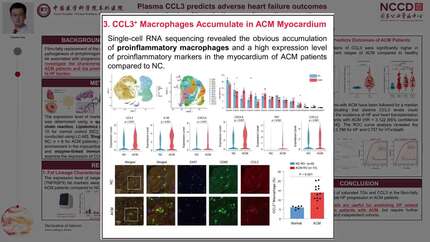
Arrhythmogenic cardiomyopathy (ACM) is a genetic disorder characterized by fibrofatty replacement of the heart muscle, often resulting in ventricular arrhythmias and heart failure. Predicting the disease course and outcome is challenging. This study combines plasma proteomics and myocardial transcriptomics to identify predictive markers for ACM outcomes.
To identify and validate specific plasma biomarkers in ACM patients, focusing on fibrosis- and inflammation-associated proteins and their correlation with clinical outcomes.
Transcriptomic analysis was conducted on myocardial tissue samples from 10 confirmed ACM patients and compared to 10 myocardial control samples using RNA sequencing. Plasma proteomics in 38 ACM patients and 24 healthy controls were analyzed to assess 360 proteins through Proximity Extension Assay. A subset of 11 ACM patients and 11 controls underwent standardized bicycle exercise testing, with blood samples taken before and after exercise. Key protein findings were validated using ELISA. Major adverse cardiac events (MACE), including sustained ventricular arrhythmias, appropriate ICD interventions, heart transplants, and death, were monitored during follow-up.
Transcriptomic analysis from myocardial tissue revealed over 3,500 dysregulated genes in ACM versus controls. Pathway analysis identified enriched fibrosis and immune-regulatory pathways in ACM, guiding plasma protein selection. Fibulin-3, CXCL10, and Endostatin were elevated in plasma of ACM patients versus healthy controls at baseline. Exercise testing showed that plasma Fibulin-3 levels increased further in ACM post-exercise. During follow-up, 23 of 38 ACM patients experienced MACE. Baseline plasma levels of Fibulin-3 and Endostatin were found to correlate with MACE in ACM patients. These findings were validated using ELISA.
This integrative analysis from myocardial specimen and plasma highlights Fibulin-3, CXCL-10 and Endostatin as potential biomarkers in the diagnosis of ACM and risk refinement. Our findings encourage further validation in larger cohorts.
Contributors

D Akdis
Author
V Wilzeck
Author
G Tan
Author
S Costa
Author
C Matter
Author
C Brunckhorst
Author
S H Winnik
Author
C A Akdis
Author
A M Saguner
Author
F Duru
Author
You may be interested in