Thoracic endovascular aortic repair for aortobronchial fistula: a case series
European Heart Journal - Case Reports


Abstract
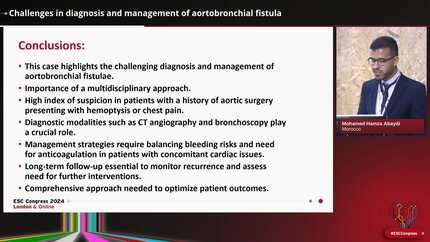
Aortobronchial fistula (ABF) formation following the rupture of thoracic pseudoaneurysm is a rare clinical entity. Its aetiology includes atherosclerosis, infections, trauma, post-surgery, and post-endovascular aortic repair. The clinical presentation of ABF includes intermittent or massive haemoptysis, acute respiratory distress, hypotension, and even death. These patients require an emergency aortic intervention to stop active haemorrhage. Thoracic endovascular aortic repair (TEVAR) is a less invasive, safe, and effective treatment compared to conventional open surgical repair
We hereby report three cases of ruptured descending thoracic aortic pseudoaneurysms resulting in a fistula formation. The first two cases had tuberculosis as their underlying aetiology, while the third case was the result of previous open post-aortic surgery. All patients presented with massive haemoptysis and were successfully treated by emergency TEVAR and had favourable outcomes.
Thoracic endovascular aortic repair is a rapid, less invasive, and effective treatment for emergency management of ABF. It has more than 85% technical success rates in the reported literature. We had procedural success in all three cases. The short and midterm outcome of ABF following TEVAR is favourable and encouraging.
Contributors

Rajesh Vijayvergiya
Author
Post Graduate Institute of Medical Education and Research Chandigarh , India

Ganesh Kasinadhuni
Author
Pruthvi C Revaiah
Author
Anupam Lal
Author
Ashish Sharma
Author
Rupesh Kumar
Author
Julien Adjedj
Author
Max Sayers
Author
Bonaros Nikolaos
Author
and Iskandar Zaid
Author
Mehta Vishal Shahil
Author
You may be interested in