A case report of acute myopericarditis associated with Graves’ thyrotoxicosis
European Heart Journal - Case Reports


Abstract
The effects of hyperthyroidism on the heart are well documented, primarily consisting of supraventricular tachycardias, congestive heart failure, and dilated cardiomyopathy. Acute myopericarditis resulting from a hyperthyroid state is an uncommon but recognized association.
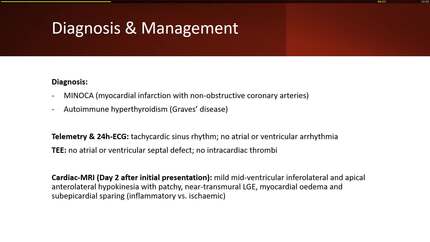
A 29-year-old man with a history of Graves’ disease presented with chest pain and electrocardiogram changes suggestive of an infero-lateral ST-elevation myocardial infarction. However, emergent coronary angiography and bedside echocardiography were normal. Troponin-I was found to be >25 000 ng/L (normal value <57). Thyroid function tests showed a significantly raised free T4 and undetectable thyroid-stimulating hormone. Cardiovascular magnetic resonance (CMR) showed extensive myocardial oedema and late gadolinium enhancement (LGE) in keeping with acute myopericarditis, alongside an enlarged thyroid gland consistent with goitre. Propylthiouracil in combination with an angiotensin-converting enzyme inhibitor and beta-blocker were commenced and eventually definitive treatment with thyroidectomy was performed. Follow-up CMR at 6 months showed complete resolution of the prior noted oedema and a reduction in the location and extent of LGE with significant residual fibrosis.
Acute myopericarditis is a common diagnosis in young patients presenting with symptoms of chest pain with elevated troponin and is frequently related to a viral illness. Hyperthyroid states are also associated with acute myopericarditis and should be particularly considered in patients with a pre-existing thyroid condition or in those with symptoms suggestive of hyperthyroidism. Given the specific treatments required in a case of myopericarditis associated with hyperthyroidism, it is important to be aware of this association and consider screening where appropriate.
Contributors

Thomas S Anderton
Author
Leeds Teaching Hospitals NHS Trust Leeds , United Kingdom of Great Britain & Northern Ireland
Christopher E D Saunderson
Author
Manali Jain
Author
Anshuman Sengupta
Author
Brett Sydney Bernstein
Author
Brian Halliday
Author
Zahra Raisi Estabragh
Author
Subhi Akleh
Author
Deepti Ranganathan
Author
You may be interested in