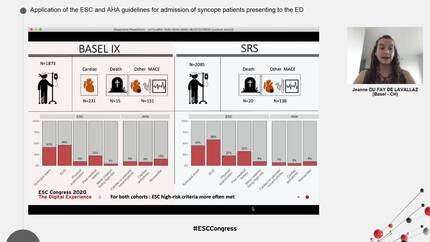
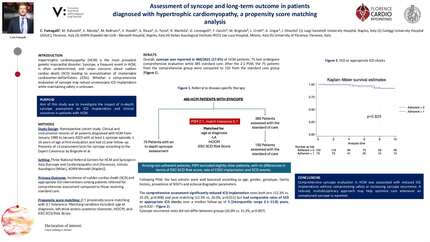
Is our initial evaluation of patients admitted for syncope guideline-directed and cost-effective?
European Heart Journal - Case Reports


Abstract
Recent American College of Cardiology and European Society of Cardiology guidelines for syncope evaluation help distinguish high-cardiac risk patients from those with low-risk orthostatic and neurogenic syncope. Inpatient evaluation is recommended if at least one high-risk feature is present.
To assess guideline adherence and its impact on hospitalization in patients who presented with syncope before and after the introduction of guideline-based syncope protocol in the emergency department (ED).
All adult patients admitted to general medicine from the ED with the primary diagnosis of syncope in the months of October 2016 and October 2018 (before and after the introduction of syncope protocol in 2017). Electronic charts were retrospectively reviewed for high-risk cardiac features and orthostatic blood pressure measurement.
Sixty patients were admitted for syncope in October 2016 (
Utilizing syncope protocol in the ED may improve guideline adherence, direct appropriate disposition, and reduce healthcare expenses.
Contributors

Muhammad Hamza Saad Shaukat
Author
Conemaugh Health Company, LLC Johnstown , United States of America

Muhammad Asim Shabbir
Author
Riju Banerjee
Author
James Desemone
Author
Radmila Lyubarova
Author
Nikos Papageorgiou
Author
Goksel Cinier
Author
Dmitry Duplyakov
Author
Nikos Papageorgiou
Author
You may be interested in