Critical limb-threatening ischaemia and microvascular transformation: clinical implications
European Heart Journal


Abstract
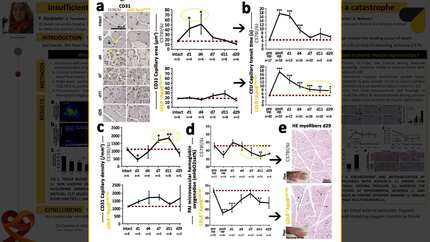
Clinical management of critical limb-threatening ischaemia (CLTI) is focused on prevention and treatment of atherosclerotic arterial occlusions. The role of microvascular pathology in disease progression is still largely unspecified and more importantly not utilized for treatment. The aim of this explorative study was to characterize the role of the microvasculature in CLTI pathology.
Clinical high-resolution imaging of CLTI patients (
Resting microvascular blood flow was not depleted but displayed decreased capillary transit time (
These findings depict a progressive, hypoxia-driven transformation of the microvasculature in CLTI muscles, which pathologically alters blood flow dynamics and aggravates tissue damage under low arterial driving pressure. Hypoxia-driven capillary enlargement can be highly important for CLTI outcomes and should therefore be considered in further development of diagnostics and treatment of CLTI.
Contributors

Santeri Tarvainen
Author
Galina Wirth
Author
Greta Juusola
Author
Olli Hautero
Author
Kari Kalliokoski
Author
Tanja Sjöros
Author
Veikko Nikulainen
Author
Jouni Taavitsainen
Author
Jarkko Hytönen
Author
Crister Frimodig
Author
Krista Happonen
Author
Tuomas Selander
Author
Tomi Laitinen
Author
Harri H Hakovirta
Author
Juhani Knuuti
Author
Nihay Laham-Karam
Author
Juha Hartikainen
Author
Kimmo Mäkinen
Author
Seppo Ylä-Herttuala
Author

You may be interested in