Non-invasive vagus nerve stimulation and exercise capacity in healthy volunteers: a randomized trial
European Heart Journal


Abstract
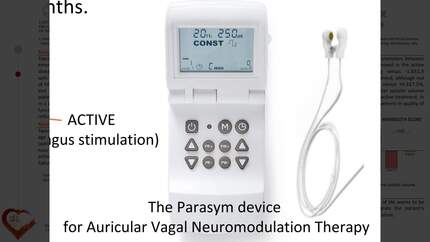
Vagal parasympathetic dysfunction is strongly associated with impaired exercise tolerance, indicating that coordinated autonomic control is essential for optimizing exercise performance. This study tested the hypothesis that autonomic neuromodulation by non-invasive transcutaneous vagus nerve stimulation (tVNS) can improve exercise capacity in humans.
This single-centre, randomized, double-blind, sham-controlled, crossover trial in 28 healthy volunteers evaluated the effect of bilateral transcutaneous stimulation of vagal auricular innervation, applied for 30 min daily for 7 days, on measures of cardiorespiratory fitness (peak oxygen consumption (VO2peak)) during progressive exercise to exhaustion. Secondary endpoints included peak work rate, cardiorespiratory measures, and the whole blood inflammatory response to lipopolysaccharide
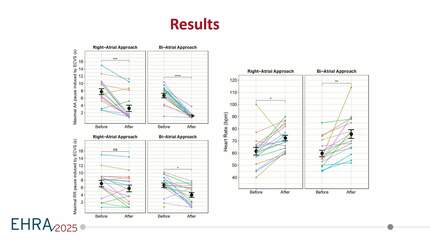
tVNS applied for 30 min daily over 7 consecutive days increased VO2peak by 1.04 mL/kg/min (95% CI: .34–1.73;
Non-invasive vagal stimulation improves measures of cardiorespiratory fitness and attenuates inflammation, offering an inexpensive, safe, and scalable approach to improve exercise capacity.
Contributors

Gareth L Ackland
Author
William Harvey Research Institute London , United Kingdom of Great Britain & Northern Ireland
Amour B U Patel
Author
Stuart Miller
Author
Ana Gutierrez del Arroyo
Author
Jeuela I Ravindran
Author
Johannes Schroth
Author
James Boot
Author
Laura Caton
Author
Chas A Mein
Author
Tom E F Abbott
Author
Alexander V Gourine
Author
You may be interested in