Evaluating the prevalence, screening, and management of diabetes mellitus in general cardiology patients
European Journal of Preventive Cardiology


Abstract
Diabetes mellitus (DM) is a major cardiovascular risk factor that not only increases the incidence but also adversely affects the prognosis of various cardiovascular morbidities. Current literature lacks comprehensive data on the glycaemic status among the typical patient population in general cardiology wards.
This study assessed the prevalence, screening practices, and treatment trends of dysglycaemia (comprising both DM and preDM) in patients hospitalized in a general cardiology department.
Data from 952 consecutive patients admitted to our Cardiology Ward between January 1, 2017, and December 31, 2019, were retrospectively analysed. The diagnostic criteria for DM and preDM were based on the rigorous guidelines recommended by the American Diabetes Association. McNemar test was utilized when comparing treatment modifications post-therapy revision.
The age of the patients was 69.2±12.8 years (mean±SD) in the cohort. The most common cardiovascular diagnoses among our patients were hypertension, ischaemic heart disease, heart failure, and atrial fibrillation. At admission, 36% of the patients had already been diagnosed with dysglycaemia. Treatment revision in known diabetic patients, due to suboptimal DM treatment, resulted in a significant reduction in the usage of insulin and sulphonylurea (from 34% to 27% and from 23% to 10%, respectively; p<0.01), and a notable increase in SGLT2-I therapy (5% to 12%; p<0.01) at discharge. 54% of patients without a prior carbohydrate metabolism disorder diagnosis underwent HbA1c testing or an oral glucose tolerance test, revealing 233 new cases of DM or preDM, accounting for 71% of the 329 screened patients. Consequently, 60% of the hospitalized patients had DM or preDM diagnosis at discharge. Metformin therapy was commenced in 50% of the newly diagnosed dysglycaemic patients.
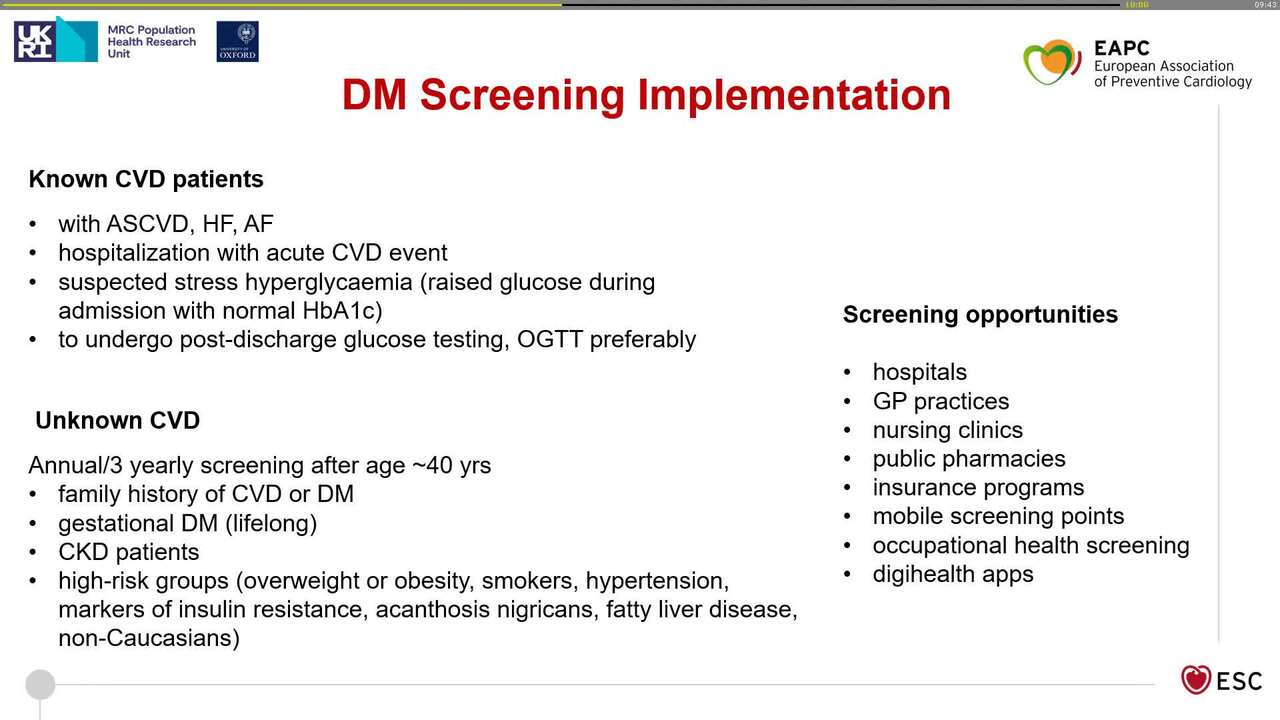
The present study indicates that nearly two-thirds of hospitalized cardiology patients suffer from dysglycaemia, with many cases undetected or not being on optimal medical treatment prior to hospital admission. Our results highlight the critical need for systematic diabetic screening in cardiology patients, and also emphasise the necessity to update the medical therapies for diabetic patients by transitioning to more optimal antidiabetic treatment. Our findings underscore the need for adopting a cardiometabolic approach in routine cardiology care.
Contributors

You may be interested in