Congenitally corrected transposition of the great arteries and coronary artery disease: a case report in an 83-year-old male
European Heart Journal - Case Reports


Abstract
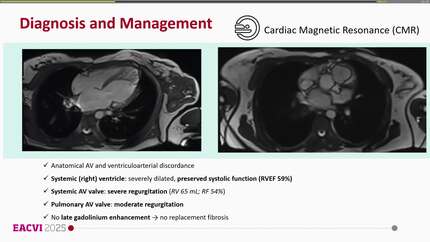
Congenitally corrected transposition of the great arteries (CCTGA), or L-loop TGA, is a rare congenital heart defect, comprising <1% of congenital heart diseases, with an incidence of ∼1 in 33 000 births. It is characterized by atrioventricular and ventriculo-arterial discordance, where the left ventricle connects to a right atrium and pumps deoxygenated blood into the pulmonary artery, while the right ventricle (RV) connects to a left atrium and pumps oxygenated blood into the aorta. Congenitally corrected transposition of the great arteries often coexists with other cardiac anomalies, although ∼10% of cases are isolated. A case report highlights a unique instance of coronary artery disease (CAD) in CCTGA.
An 83-year-old male with CCTGA presented with persistent nausea, fatigue, poor oral intake, and epigastric pain. He had a history of hypertension, Type II diabetes, dyslipidaemia, ischaemic heart disease, and chronic atrial fibrillation. On examination, he was stable but showed signs of a urinary tract infection. A cardiac workup revealed no ischaemic changes on electrocardiography, but a cardiac computed tomography identified significant CAD involving multiple vessels. A decision was made to perform percutaneous coronary intervention on the right coronary artery, successfully placing two stents.
In patients with CCTGA, major factors contributing to morbidity and mortality include progressive decline in systemic RV function and systemic tricuspid valve regurgitation. A retrospective study showed that 25% of uncomplicated CCTGA patients develop heart failure by age 45, while approximately two-thirds of complicated cases do. Survival beyond age 70 is rare. Prompt management of CAD through angioplasty is critical to prevent further deterioration of RV function and worsening tricuspid regurgitation. However, the atypical positioning of the aorta and coronary arteries complicates selective coronary angiography, making a challenging diagnosis and treatment.
Contributors

Ahmed Alomrani
Author
Mohammed Alshammari
Author
Fahad Bindakhil
Author
Hadi Shabi
Author
Abdullah Alkhodair
Author
Flemming Javier Olsen
Author
Melonie Johns
Author
Luis Antonio Moreno-Ruiz
Author
Abdullah Abdullah
Author
You may be interested in